Best Snow Pants for Women: 8 Styles for Skiing, Sledding and Winter Walks
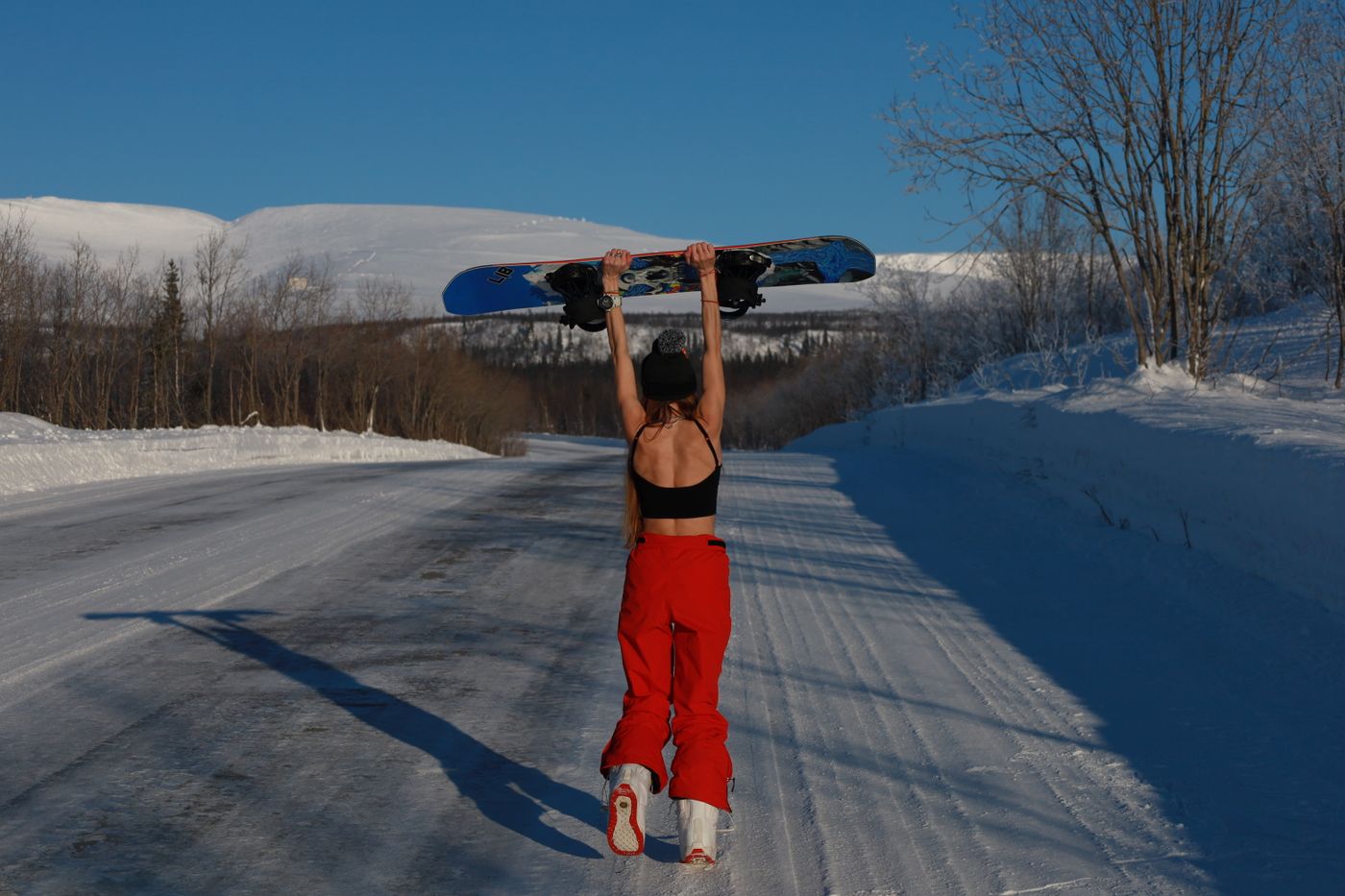
Snow pants for women keep you warm and dry when you are skiing, snowboarding, sledding with kids, shoveling the driveway or walking through deep snow. Ordinary jeans or leggings soak through quickly in snow, which makes you cold fast; snow pants have a water-resistant or waterproof outer layer and, often, insulation to hold in heat.
Choosing the right pair depends on how you will use them, how cold it gets where you live and whether you prefer to layer. This guide explains the eight main types of snow pants, what waterproof and insulation ratings mean in plain language, how they should fit over base layers, and how to care for them so they keep working for many winters.
NexoShe is reader-supported. As an Amazon Associate I earn from qualifying purchases. When you buy through links on our site, we may earn a commission at no extra cost to you. Read our full affiliate disclosure, written in line with the FTC Endorsement Guides.
Quick Guide to Snow Pants
- Resort skiing: insulated, waterproof ski pants with snow gaiters.
- Backcountry or spring skiing: uninsulated shell pants you can layer under.
- Very cold weather: bib snow pants that cover your lower back.
- Sledding and winter walks: fleece-lined, water-resistant snow pants.
- Everyday winter: softshell pants that look closer to regular trousers.
| Type | Best for |
|---|---|
| Insulated Ski Pants View on Amazon → | Resort skiing and cold days on the slopes |
| Shell Snow Pants View on Amazon → | Active skiing, spring conditions and layering |
| Bib Snow Pants View on Amazon → | Deep snow, very cold days and keeping snow out of your waistband |
| Softshell Snow Pants View on Amazon → | Winter hiking and walking |
| Fleece-Lined Snow Pants View on Amazon → | Sledding, playing in the snow with kids and winter errands |
| Stretch Snow Pants View on Amazon → | Freedom of movement and a slimmer look |
| Plus-Size Snow Pants View on Amazon → | Extended sizing and comfortable layering |
| Petite and Tall Snow Pants View on Amazon → | Getting the length right |
The 8 Types of Snow Pants
Snow pants differ mostly in waterproofing, insulation and how much they cover. Here is how to choose.
1. Insulated Ski Pants
Best for: resort skiing and cold days on the slopes.
What to look for: a waterproof outer, built-in insulation, taped seams and inner snow gaiters at the ankle.
Fit tip: they should fit over a thin base layer without feeling tight when you bend your knees.
How to wear it: pair with a waterproof ski jacket, thermal top and ski socks.
2. Shell Snow Pants
Best for: active skiing, spring conditions and layering.
What to look for: a waterproof, breathable shell without insulation, often with vents.
Fit tip: leave room for a fleece or thermal layer underneath.
How to wear it: wear over thermal base layers on cold days.
3. Bib Snow Pants
Best for: deep snow, very cold days and keeping snow out of your waistband.
What to look for: bib straps and a high front and back panel.
Fit tip: bibs make bathroom breaks more complicated, so look for drop-seat or side-zip designs.
How to wear it: pair with a warm mid-layer and a shell jacket.
4. Softshell Snow Pants
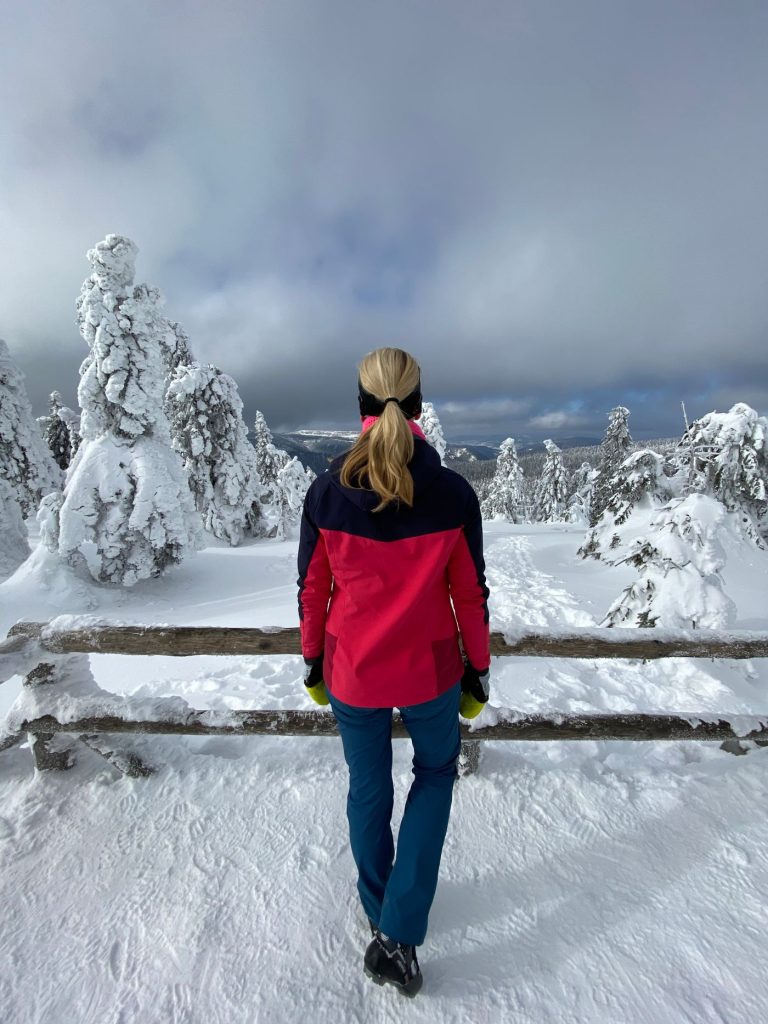
Best for: winter hiking and walking.
What to look for: a stretchy, water-resistant fabric that breathes well.
Fit tip: softshells resist light snow but are not fully waterproof in wet snow.
How to wear it: wear with hiking boots and a fleece.
5. Fleece-Lined Snow Pants
Best for: sledding, playing in the snow with kids and winter errands.
What to look for: a brushed fleece lining and water-resistant outer fabric.
Fit tip: check the waterproofing if you will kneel or sit in snow for long periods.
How to wear it: pair with a puffer jacket and winter boots.
6. Stretch Snow Pants
Best for: freedom of movement and a slimmer look.
What to look for: four-way stretch fabric and a fitted cut.
Fit tip: stretch styles are less roomy for layering, so size with your base layer.
How to wear it: wear with a fitted ski jacket.
7. Plus-Size Snow Pants
Best for: extended sizing and comfortable layering.
What to look for: wider sizing ranges, adjustable waist tabs and roomy thighs.
Fit tip: check the size chart against your hip measurement.
How to wear it: pair with a long insulated jacket.
8. Petite and Tall Snow Pants
Best for: getting the length right.
What to look for: short and long inseam options.
Fit tip: the hem should cover the top of your boots without dragging on the ground.
How to wear it: choose the inseam for your boots, not your sneakers.
Waterproofing and Breathability Explained
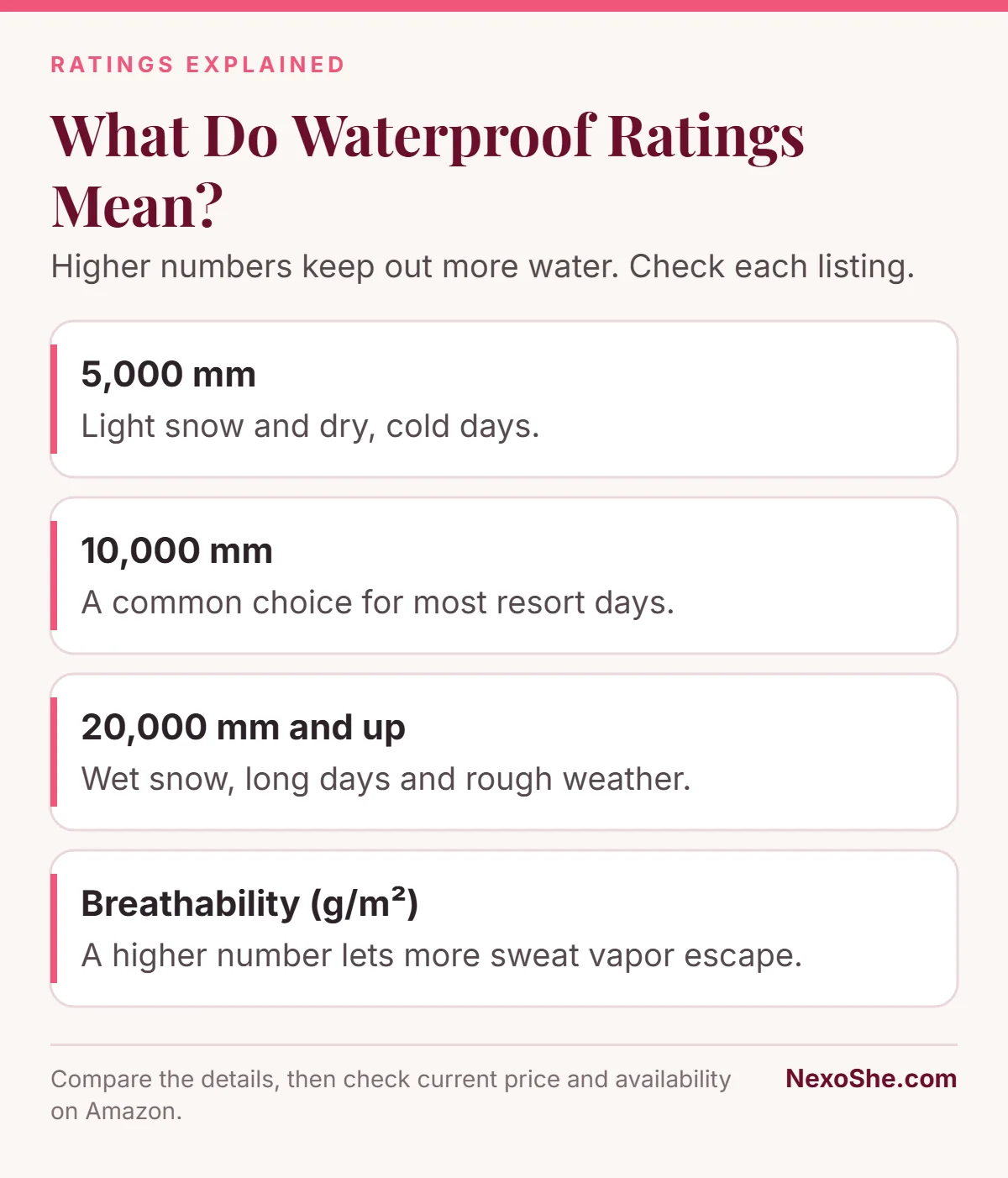
Snow pants often list two numbers. The waterproof rating, in millimeters, tells you how much water pressure the fabric can withstand; roughly speaking, 5,000 mm suits light snow and dry conditions, 10,000 mm suits most resort days and 20,000 mm suits wet snow and heavy use. The breathability rating, in grams, tells you how well sweat vapor escapes; higher numbers feel drier during active skiing. Taped seams keep water from leaking through stitching. These are general guidelines, so check each brand’s explanation.
Insulation Explained
Insulated snow pants have a layer of synthetic fill sewn inside. Synthetic insulation stays warm even if it gets a little damp, which is why it is common in snow pants. Insulation is often listed in grams; lighter fills suit active skiing and milder days, heavier fills suit cold, still days or people who run cold. If you prefer flexibility, choose shell pants and add thermal layers as needed.
How Snow Pants Should Fit
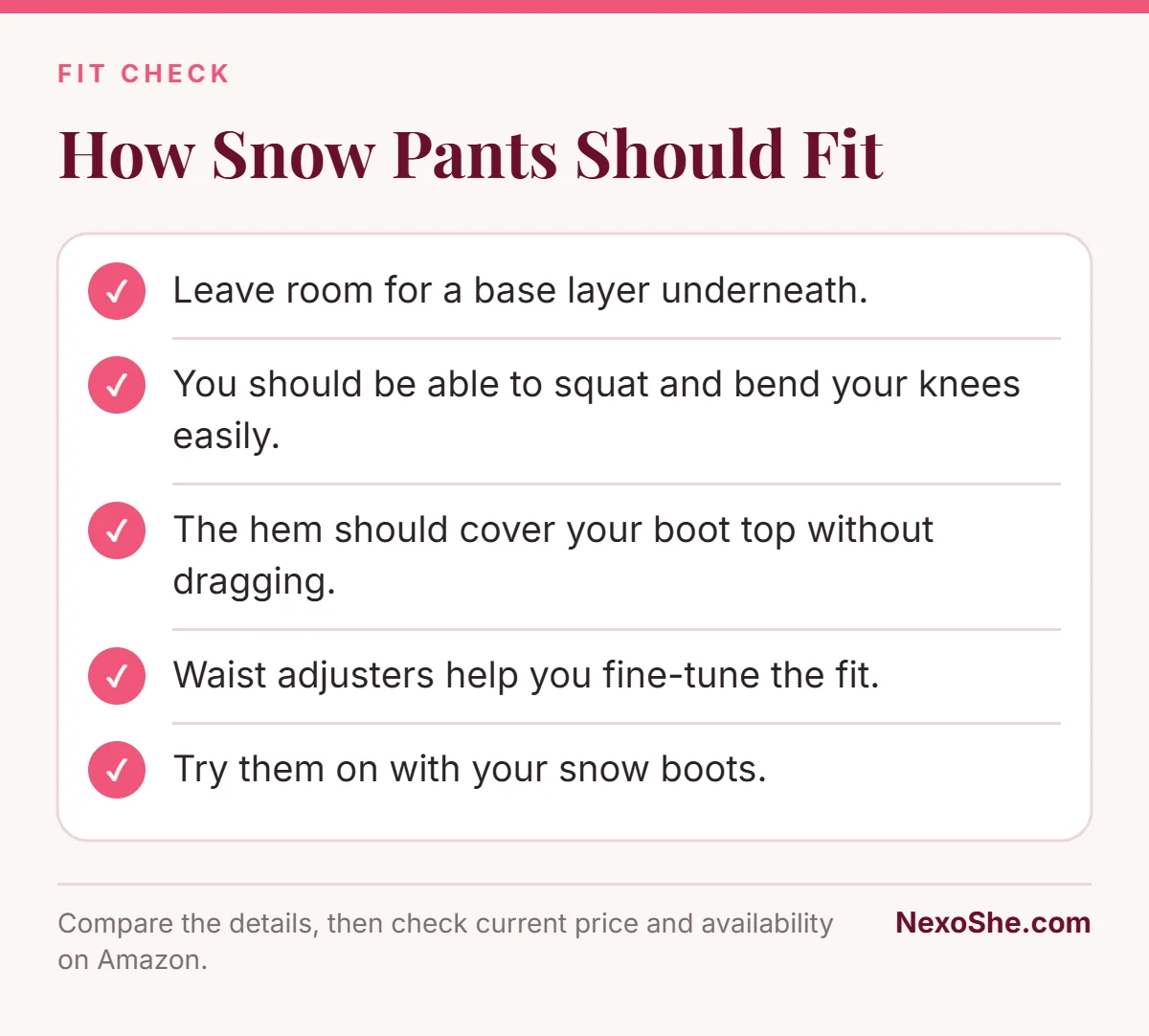
- Waist: comfortable over a base layer, with adjustable tabs or a belt.
- Seat and thigh: enough room to squat, kneel and climb without pulling.
- Knee: articulated knees bend more easily.
- Length: the hem should cover the top of your boots.
- Gaiters: inner gaiters should fit snugly around your boots to keep snow out.
Features Worth Looking For
- Inner snow gaiters with grippers.
- Zippered thigh vents for active days.
- Reinforced cuffs to resist ski edges.
- Zip pockets for phone and lift pass.
- Adjustable waist tabs.
- Boot hooks to keep gaiters in place.
How to Layer Under Snow Pants
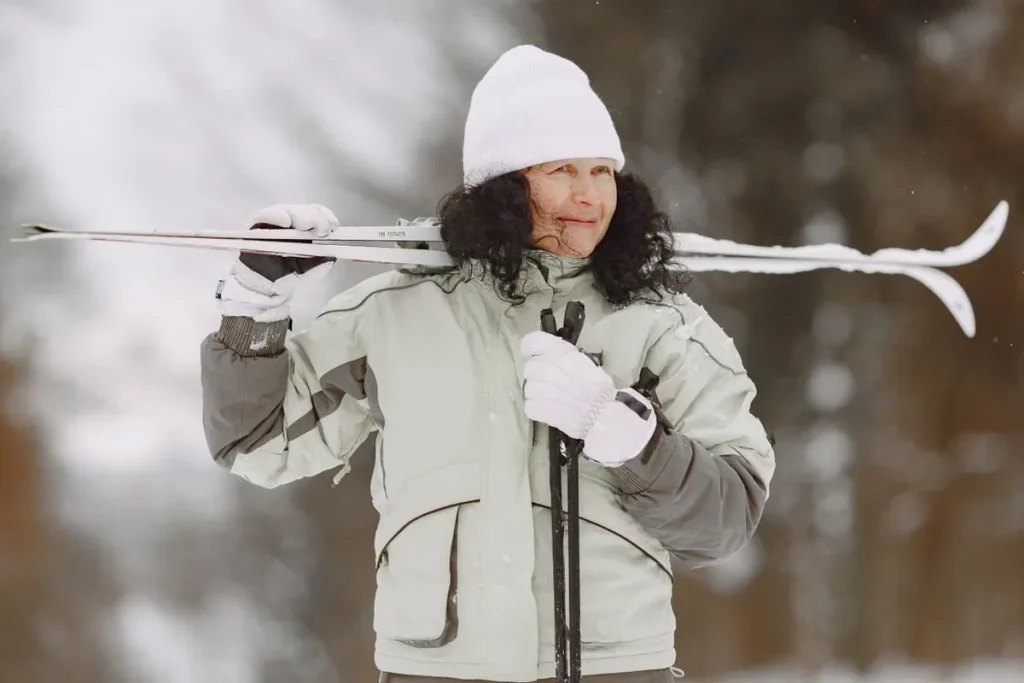
Wear a moisture-wicking base layer next to your skin, never cotton, which stays wet and cold. On very cold days, add a thin fleece layer. Thick ski socks should be the only layer inside your boots; tucking leggings or pants into boots can cause pressure points. See our thermal base layers and fleece-lined leggings.
Snow Pants for Kids Activities
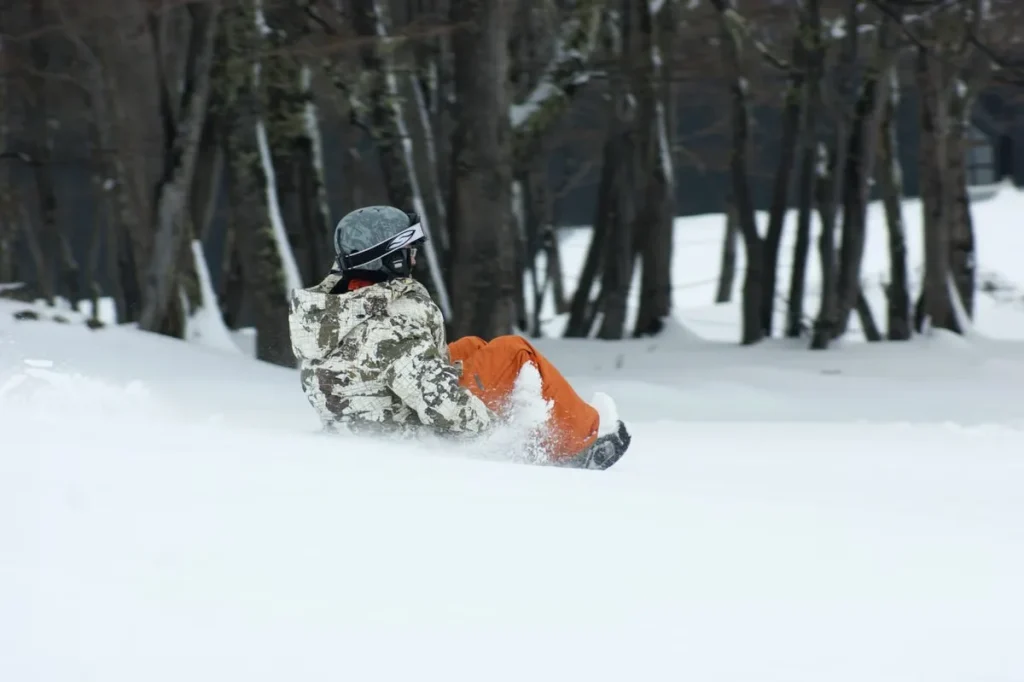
If you mostly need snow pants for sledding, building snowmen or standing at a hockey rink, fleece-lined or lightly insulated snow pants with good water resistance are usually enough. Prioritize warmth at the seat and knees, since that is where you will kneel and sit in snow.
Care and Re-Waterproofing
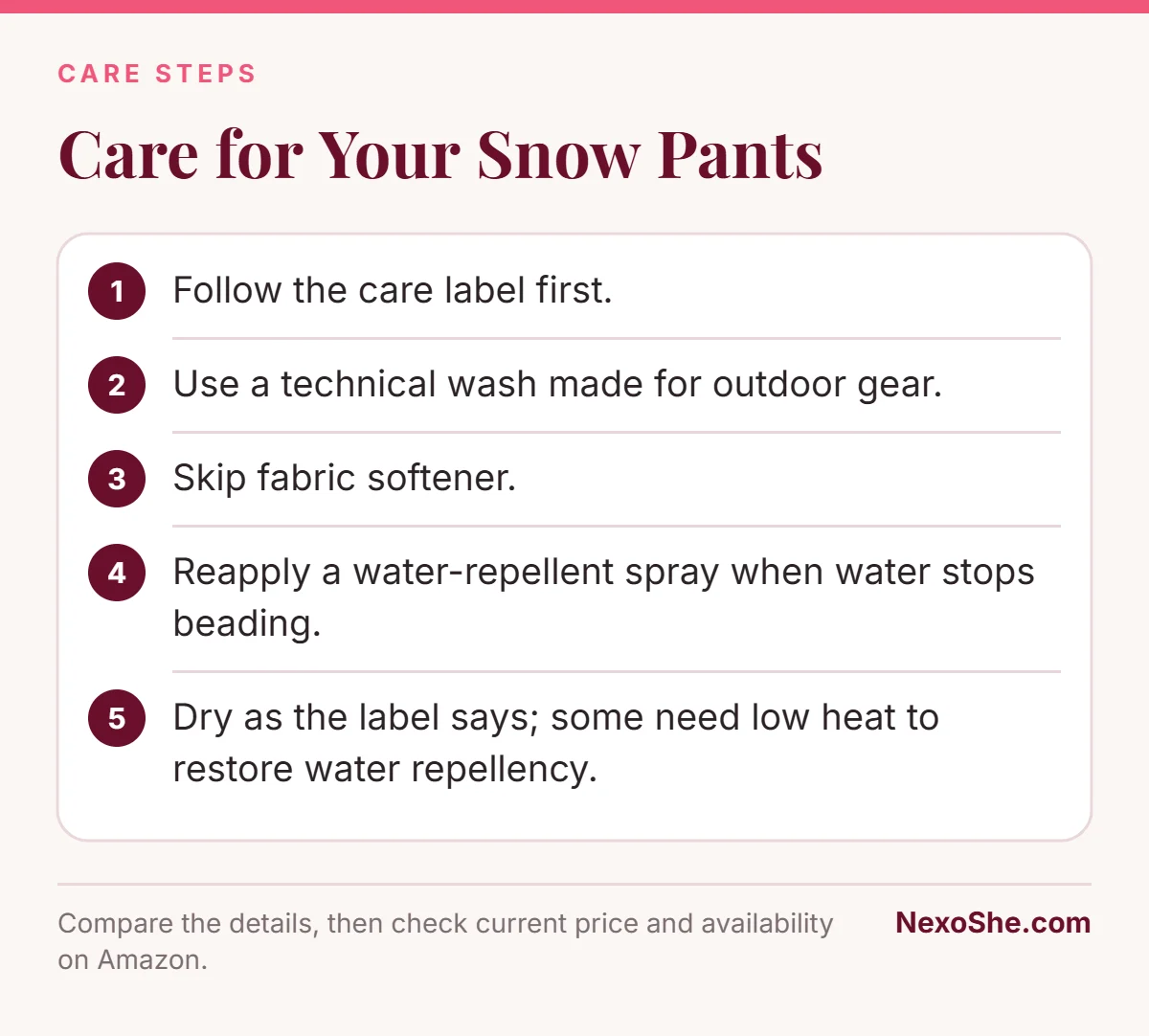
Wash snow pants only when needed, using a technical wash rather than regular detergent, which can leave residue that reduces water repellency. Close all zips and velcro, wash on a gentle cycle and tumble dry low if the label allows, since gentle heat can reactivate the water-repellent finish. When water stops beading on the surface, use a spray-on or wash-in DWR treatment.
Common Mistakes
- Wearing cotton leggings under snow pants.
- Buying pants too tight to layer.
- Choosing water-resistant pants for wet snow or long sledding sessions.
- Ignoring inner gaiters, which keep snow out of boots.
- Washing with fabric softener, which reduces waterproofing.
Colors and Visibility
Bright colors such as red, teal and pink are easier for friends and family to spot on the slopes and in photos. Black and navy hide dirt and look sleek, and they pair easily with any jacket. If you buy one pair to use for years, a dark neutral is the most versatile choice.
Snow Pants by Activity
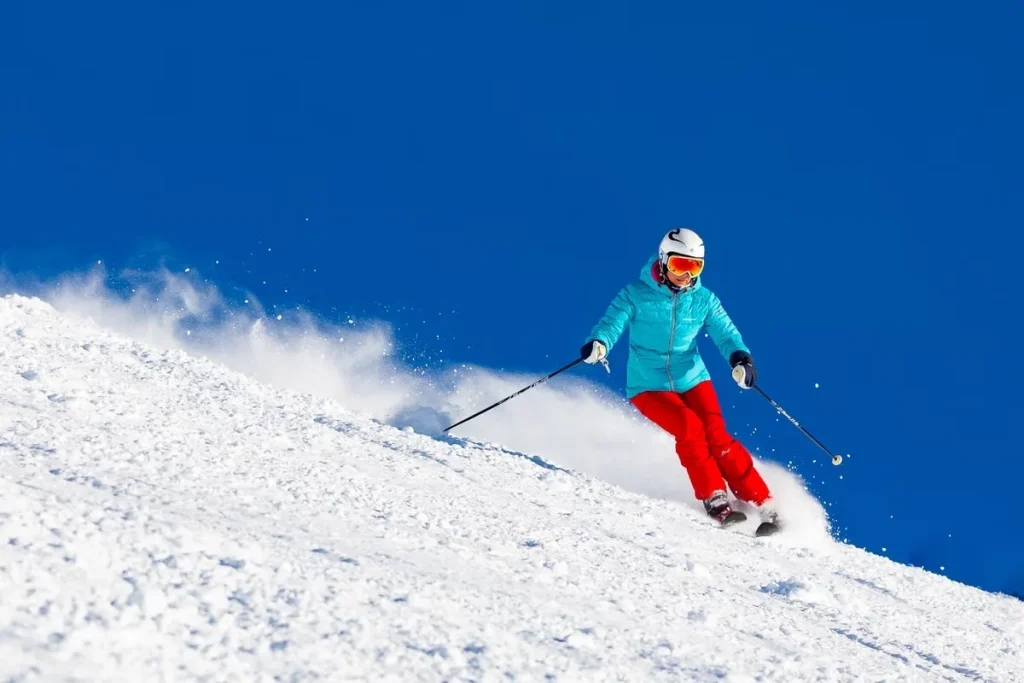
- Downhill skiing: insulated or shell pants with a waterproof rating of at least 10,000 mm, gaiters and reinforced cuffs.
- Snowboarding: a slightly looser fit and extra-durable seat and knees for time spent sitting in snow.
- Cross-country skiing: lightweight, highly breathable softshell pants; insulation is often too warm.
- Snowshoeing and hiking: softshell or shell pants with vents.
- Sledding and snow play: fleece-lined or insulated pants with a waterproof seat.
- Shoveling and errands: water-resistant fleece-lined pants that slip on over leggings.
Matching the pants to the activity keeps you comfortable: overheating and sweating can make you just as cold as wet snow.
Buying Checklist
- Decide between insulated and shell pants based on your climate and activity.
- Check the waterproof and breathability ratings.
- Look for taped seams, gaiters and boot hooks.
- Measure your hips and inseam and compare with the size chart.
- Read reviews about warmth and true-to-size fit.
- Check the return policy in case you need a different size for layering.
How Long Do Snow Pants Last?
A good pair of snow pants can last many seasons with proper care. The waterproof coating wears off over time, but it can be renewed with a DWR treatment. Replace them when seams start leaking, the fabric tears at the cuffs or the insulation flattens and no longer keeps you warm.
Snow Pants by Body Shape
Snow pants are bulkier than regular pants, so fit is about comfort and movement first.
- Petite: look for short inseams so the hem does not drag in snow and get soaked; a slimmer stretch cut avoids extra bulk.
- Tall: long inseams keep boots covered when you bend your knees on a lift or sled.
- Curvy hips: pants with roomier hips and adjustable waist tabs prevent gaps at the back.
- Plus size: brands with extended sizes and stretch panels make layering and movement easier.
- Athletic legs: articulated knees and stretch fabric prevent tightness in the thigh.
Snow Pants vs Fleece-Lined Leggings
Fleece-lined leggings are warm and comfortable for cold, dry days and winter walks, but they soak through in snow. Snow pants have a water-resistant or waterproof outer that keeps you dry when you kneel, sit or fall in snow. Many people wear fleece-lined leggings under shell snow pants on very cold days for the best of both. See our fleece-lined leggings guide.
Budget vs Premium Snow Pants
More expensive snow pants usually have higher waterproof ratings, more breathable membranes, taped seams throughout and more durable fabrics. If you ski many days a season, those features are worth it. If you need pants for a few snow days, sledding or a single trip, a more affordable pair with good water resistance and basic insulation is often enough. Whatever you spend, prioritize fit, inner gaiters and a waterproof seat.
Packing Snow Pants for a Trip
Snow pants take up a lot of luggage space. Roll them tightly or use a compression bag, and wear the bulkiest layers on the plane if you are short on room. Pack a small bag of essentials for the slopes: a thin base layer, ski socks, a neck gaiter, gloves and a hat. If you ski only once a year, check whether the resort or a local shop rents snow pants, which can be more practical than buying a pair you rarely use.
Final Tip
Try snow pants on with your base layers and boots, then squat and lift each knee high to make sure you can move freely before you head out.
Shop Snow Pants for Women
Prices, sizes and availability change often, so check the current details, size chart, inseam, fabric and the return policy on Amazon before you buy.
How we chose these picks: We compared Amazon product listings, brand information and patterns in recent customer feedback to match each pick to a specific need. We have not personally tested every product. Prices, deals and availability change often, so check the current details on Amazon before you buy. Graphics on this page are original NexoShe illustrations; photos are from Pexels.
Frequently Asked Questions
Are snow pants and ski pants the same?
They are very similar; ski pants are usually designed for skiing with features like gaiters, vents and reinforced cuffs.
How warm should snow pants be?
It depends on activity and climate. Insulated pants suit cold, still days; shells with layers suit active or milder days.
Do I need waterproof or water-resistant snow pants?
Waterproof pants are best for skiing and wet snow; water-resistant pants suit short outings and light snow.
What should I wear under snow pants?
A moisture-wicking base layer, never cotton, and add fleece on very cold days.
How should snow pants fit?
Roomy enough to layer and bend, with the hem covering the top of your boots.
How do I keep snow pants waterproof?
Wash with a technical cleaner and refresh the water-repellent coating when water stops beading.
More from NexoShe
Stay warm with our winter boots, puffer jackets and winter hats.
Find more guides on the NexoShe Bottoms page and the Fashion page.
Photos: Pexels. Our picks are styles chosen from our research, not personal product tests. Check sizing, fabric and return policies on Amazon before you buy.