
Best Thermal Base Layers for Women for Everyday Winter Layering
A good thermal base layer is the quiet piece that makes winter dressing easier. Worn close to the skin under sweaters, work clothes or a coat, it adds warmth without the bulk of extra layers. This guide covers the main thermal base layers for women, from thin everyday tops you can hide under a blouse to waffle-knit henleys and full sets for cold commutes. Each pick includes honest pros and cons, plus tips on fabric, fit and care and outfit ideas for wearing thermals on their own.
NexoShe is reader-supported. As an Amazon Associate I earn from qualifying purchases. When you buy through links on our site, we may earn a commission at no extra cost to you. Read our full affiliate disclosure, written in line with the FTC Endorsement Guides.
Quick Picks

- Best overall style: midweight thermal top and legging set
- Best for under-work layering: thin scoop-neck thermal top
- Best for commuting: merino wool blend base layer top
- Best budget pick: fleece-lined thermal underwear set
- Best for petite frames: ankle-length thermal leggings

| Base layer | Best for |
|---|---|
| Midweight Thermal Top and Legging Set View on Amazon → | Anyone building a winter base layer wardrobe from scratch |
| Thin Scoop-Neck Thermal Top View on Amazon → | Chilly offices and layering under blouses, shirts and fine knits |
| Merino Wool Blend Base Layer Top View on Amazon → | Walking or riding transit in the cold, then sitting in a warm office |
| Waffle-Knit Thermal Henley View on Amazon → | Weekends, cabin trips |
| High-Waist Thermal Base Layer Leggings View on Amazon → | Wearing under jeans, trousers or skirts on cold days |
| Fleece-Lined Thermal Underwear Set View on Amazon → | Trying thermals for the first time without spending much |
| Ankle-Length Thermal Leggings View on Amazon → | Petite women who find standard thermal leggings bunch at the ankle |
| Mock-Neck Thermal Top View on Amazon → | Cold, windy days and layering under crewneck sweaters and coats |
| Seamless Thermal Camisole View on Amazon → | Adding a warm layer under dresses and fitted sweaters |
The Best Thermal Base Layers for Women to Consider
Best overall style
Midweight Thermal Top and Legging Set
Best for: anyone building a winter base layer wardrobe from scratch
Why we recommend it: A matching set takes the guesswork out of layering, since the top and bottoms are designed to work together. Midweight fabric is the middle ground: warm enough for cold days out, yet thin enough to wear under jeans and a sweater.
Key features to look for
- A soft brushed interior or smooth stretch knit, depending on your preference
- Flat seams that do not dig in under clothes
- Clear fabric and weight details; check the listing for the warmth information
Pros
- Top and bottoms can be worn together or separately
- Good value compared with buying pieces one by one
Cons / limitations
- Tops and bottoms may fit differently, so check the size chart for both
- Midweight can feel too warm in heated offices
Best for under-work layering
Thin Scoop-Neck Thermal Top
Best for: chilly offices and layering under blouses, shirts and fine knits
Why we recommend it: A lightweight, fitted thermal with a low scoop neck stays hidden under most necklines, so it adds a little warmth without changing the look of your work outfit. It also pairs well under a fine-gauge cardigan when the office thermostat runs low.
Key features to look for
- A thin, smooth knit with stretch so it lies flat under fitted tops
- A neckline lower than your usual work tops
- Neutral shades like black, ivory and nude tones that do not show through
Pros
- Stays hidden under most work clothes
- Easy to wash and quick to dry
Cons / limitations
- Offers less warmth than heavier styles
- Very thin fabrics can show seams or texture under silky blouses
Best for commuting
Merino Wool Blend Base Layer Top
Best for: walking or riding transit in the cold, then sitting in a warm office
Why we recommend it: Merino wool blends are a popular base layer choice because the fiber is soft and breathable, so many people find them comfortable when moving between cold streets and heated rooms. Buyers also like that merino tends to stay fresh between wears, which helps on busy weeks.
Key features to look for
- Merino listed clearly in the fiber breakdown
- A crew or mock neck for a little more coverage outdoors
- Thumbholes or longer sleeves that stay put under a coat
Pros
- Comfortable going between outdoors and indoors
- Many people find fine merino less itchy than regular wool
Cons / limitations
- Usually costs more than synthetic thermals
- Needs gentle washing and air drying to keep its shape
Best waffle knit
Waffle-Knit Thermal Henley
Best for: weekends, cabin trips and anyone who wants a thermal that looks like a top
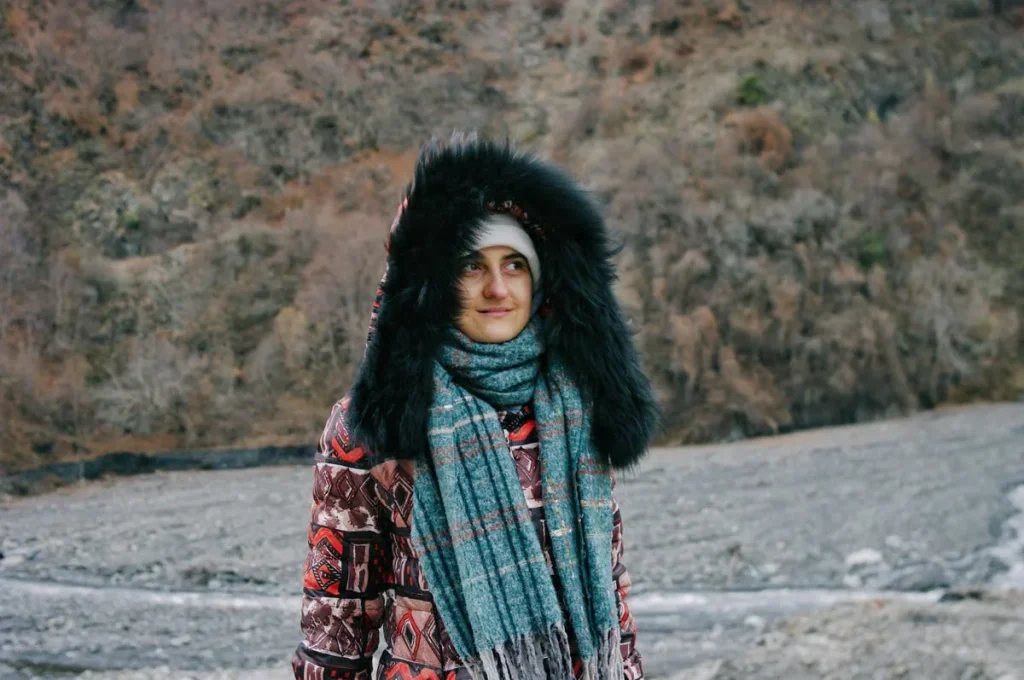
Why we recommend it: The textured waffle weave adds visual interest, so this style works as an outer layer with jeans as easily as it does under a flannel shirt. A short button placket at the neck gives it a relaxed, classic look that many people reach for all winter.
Key features to look for
- A defined waffle texture that does not look thin or stretched
- Sturdy placket buttons and a ribbed neckline
- A slightly relaxed fit if you plan to wear it on its own
Pros
- Looks finished enough to wear alone
- Pairs easily with denim, corduroy and leggings
Cons / limitations
- Bulkier than smooth thermals under fitted clothes
- Cotton-heavy waffle knits can shrink if dried on high heat
Best for bottoms
High-Waist Thermal Base Layer Leggings
Best for: wearing under jeans, trousers or skirts on cold days
Why we recommend it: A high waistband stays in place under pants and overlaps with your top, so there is no cold gap at the back when you bend or sit. Smooth thermal leggings are thinner than fleece-lined styles, which makes them easier to fit under regular pants. For a warmer outer layer, see our guide to fleece-lined leggings.
Key features to look for
- A wide, soft waistband that does not roll down
- A smooth outer face so pants slide on easily
- A gusset and flat seams for easier movement
Pros
- Fits under most straight and wide-leg pants
- Works under skirts and dresses with boots too
Cons / limitations
- Can feel tight under slim-fit jeans
- Usually not opaque enough to wear on their own
Best budget pick
Fleece-Lined Thermal Underwear Set
Best for: trying thermals for the first time without spending much
Why we recommend it: Many thermal sets are budget-friendly, and fleece-lined versions feel soft and cozy right away. They are a practical choice for weekend errands, outdoor events and lounging at home.
Key features to look for
- A brushed fleece interior that feels soft rather than scratchy
- Machine-washable fabric
- The fabric blend listed clearly; check the listing for the warmth details
Pros
- Budget-friendly way to add a warm layer
- Soft feel many people like for lounging
Cons / limitations
- Synthetic fleece can pill over time
- Less breathable than merino, so it may feel warm indoors
Best for petite frames
Ankle-Length Thermal Leggings
Best for: petite women who find standard thermal leggings bunch at the ankle
Why we recommend it: Standard-length thermals often gather around the ankles on shorter legs, which can feel bulky inside boots. An ankle-length or petite-length cut ends neatly, so socks and boots sit smoothly over the top.
Key features to look for
- A petite option or ankle-length cut in the listing
- A rise that suits a shorter torso without sitting too high
- Soft, stretchy fabric that recovers well after wear
Pros
- No extra fabric bunching inside boots
- Cleaner line under cropped pants
Cons / limitations
- Petite options can be limited in color
- May leave a gap above socks on longer legs
Best under sweaters
Mock-Neck Thermal Top
Best for: cold, windy days and layering under crewneck sweaters and coats
Why we recommend it: A short mock neck adds a little extra coverage without the bulk of a full turtleneck, and it peeks out neatly above a sweater. It is a polished option that looks intentional under blazers and oversized sweaters.
Key features to look for
- A neck that sits close without feeling tight
- A longer body that stays tucked in
- A smooth, stretchy knit in versatile neutral shades
Pros
- Adds neck coverage under scarves and coats
- Looks neat peeking out of sweaters
Cons / limitations
- Some people dislike any high neckline
- Can feel warm in heated rooms
Best seamless layer
Seamless Thermal Camisole
Best for: adding a warm layer under dresses and fitted sweaters
Why we recommend it: A thermal camisole adds a warm layer to your torso while leaving the arms free, so it works under dresses, sleeveless tops and fitted sweaters where sleeves would bunch. Seamless knitting helps it disappear under smooth fabrics.
Key features to look for
- Seamless or bonded edges that do not show through
- Adjustable or wide straps that stay on the shoulder
- A longer hem that stays tucked in
Pros
- Very discreet under fitted clothes
- Easy to wear under dresses
Cons / limitations
- Covers the torso only, not the arms
- Seamless styles can run small, so check the size chart
How to Style Thermal Base Layers
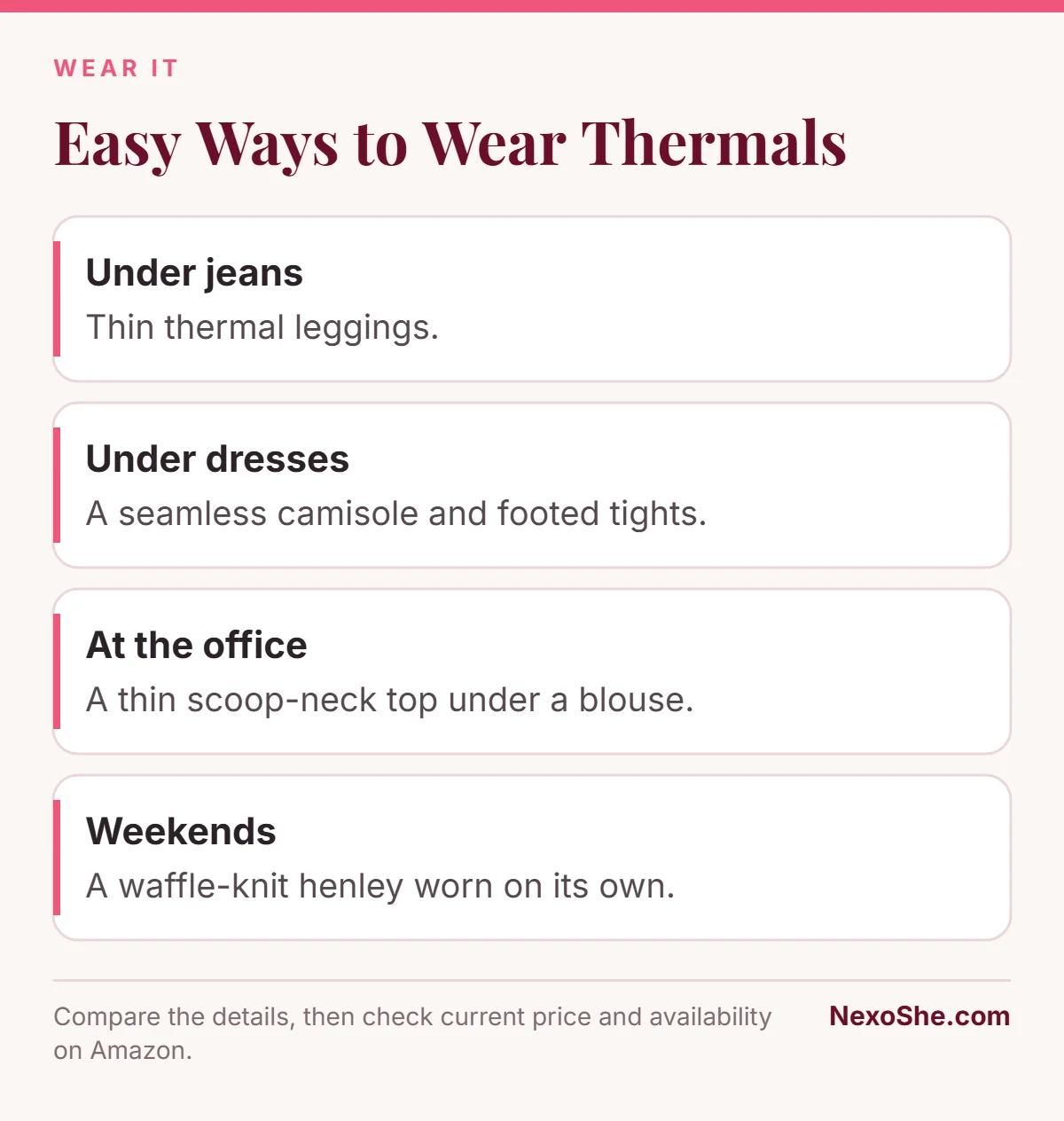
Thermals do not have to stay hidden. These outfit ideas help them work as part of the look.
- Office layers: A thin scoop-neck thermal under a button-down shirt, tailored trousers and loafers. Add high-waist thermal leggings under the trousers on the coldest days.
- Weekend casual: A waffle-knit henley on its own with straight-leg jeans, a puffer vest and lined winter boots.
- Polished winter: A mock-neck thermal under a crewneck sweater, with a plaid skirt, opaque tights and knee-high boots.
- At home: A matching thermal set with thick socks and an open cardigan feels as easy as your favorite loungewear.
How to Choose a Thermal Base Layer
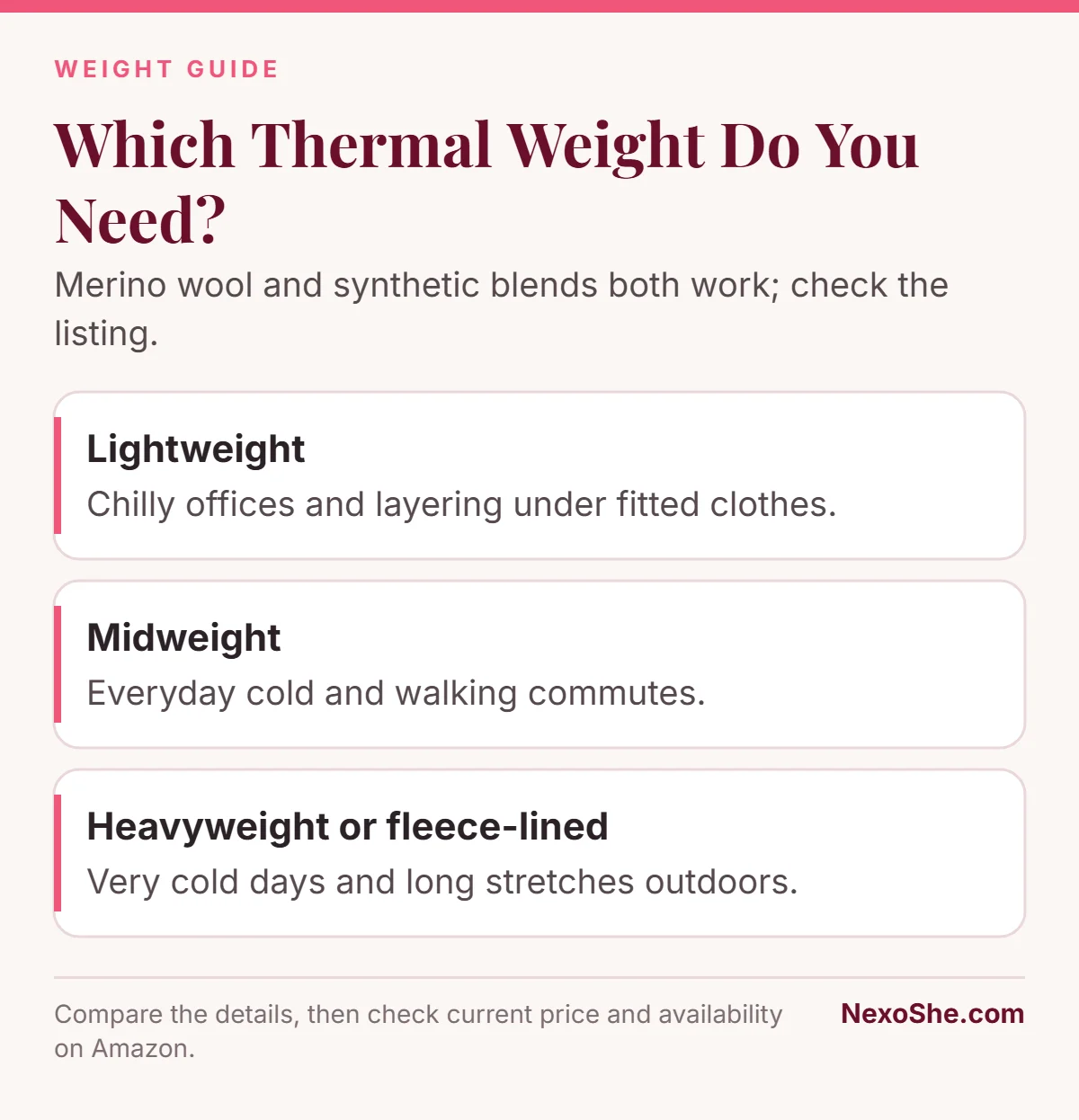
Fabric. Merino wool blends are soft, breathable and good for moving between cold streets and warm rooms, but they cost more and need gentle care. Synthetic knits such as polyester and nylon blends are often budget-friendly, quick drying and stretchy. Brushed or fleece-lined fabrics feel cozy, though they are less breathable. Cotton waffle knits look great on their own, but cotton holds moisture, so they suit relaxed days more than active ones.
Weight and warmth. Lightweight thermals are easiest to hide under work clothes, midweight styles are the all-rounder, and heavier or lined styles suit long stretches outside. Labels vary between makers, so check the listing for the warmth or temperature details rather than relying on the product name alone.
Sizing and fit. A base layer should sit close to the skin without squeezing. Read the size chart for each listing, since thermal sizing varies, and think about your outer layers: snug thermals work best under fitted pants, while slightly relaxed styles suit tops worn on their own. Petite and tall buyers should look for length-specific options.
Care. Wash thermals inside out in cool water and skip high heat, which can shrink cotton and wear down stretch fibers. Merino usually does best on a wool or gentle cycle, dried flat. Curious how we build guides like this? Read how we choose products.
Layering Tip
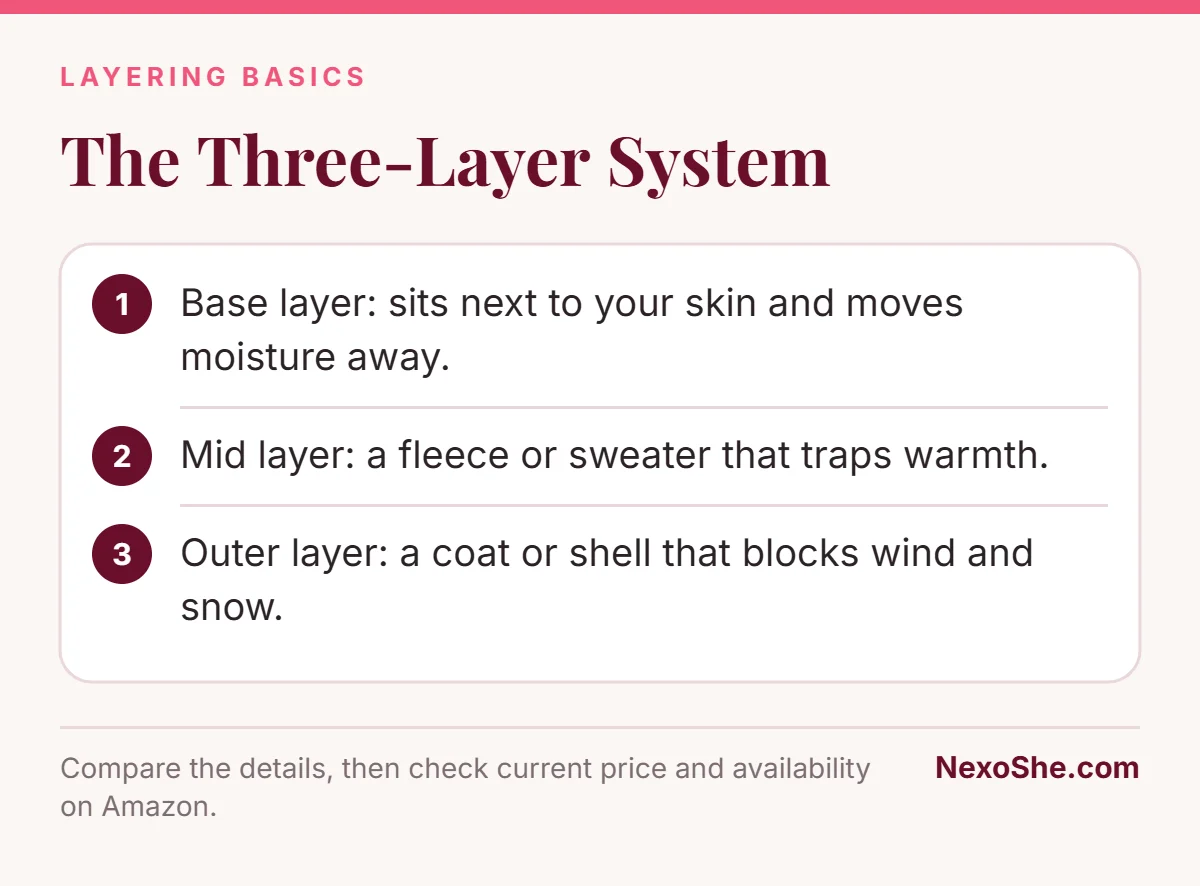
For very cold days, wear a lightweight thermal base layer next to the skin, a fleece or wool mid layer on top and a windproof or insulated outer layer. Each layer traps warm air, and you can remove one if you get too warm indoors. Avoid cotton as a base layer for active days outside, because it holds sweat and makes you feel colder once you stop moving.

How we chose these picks: We compared Amazon product listings, brand information and patterns in recent customer feedback to match each pick to a specific need. We have not personally tested every product. Prices, deals and availability change often, so check the current details on Amazon before you buy. Graphics on this page are original NexoShe illustrations; photos are from Pexels.
Got Questions?
Frequently Asked Questions
Should a thermal base layer be tight?
It should be close fitting but comfortable. A snug fit keeps the fabric against your skin and makes layering easier, but it should not dig in at the waist, cuffs or underarms. If you plan to wear a thermal top on its own, a slightly relaxed fit often looks better.
Can I wear thermals to work?
Yes. Thin, smooth thermals with low necklines are designed to hide under blouses, shirts and trousers. Choose neutral or skin-tone shades under light fabrics and check that the seams lie flat.
Is merino or synthetic better for a base layer?
It depends on how you will wear it. Merino blends are soft and breathable, and many people like them for commuting, while synthetics are often more budget-friendly, stretchy and quick to dry. Either way, check the listing for the fabric and warmth details.
How often should I wash thermal base layers?
Synthetic thermals are usually best washed after each wear. Merino tends to stay fresh longer, so many people wear it a few times between washes. Always follow the care label.
More from NexoShe
Layering up for winter? Pair your thermals with the best fleece-lined leggings, add a cozy outer layer from our best winter coats for women, and keep your feet warm with our guide to the best winter boots for women.