Best Puffer Jackets for Women: Cropped, Long, Packable and More
A puffer jacket is the easiest way to feel bundled up without much effort. Quilted channels hold insulation close, the shell blocks wind, and the look now ranges from sporty to sleek. The right one depends on your days: a long hooded puffer for commutes, a packable one for travel, a cropped or glossy style for fun. This guide covers the main puffer jackets for women, with honest pros and cons, fit and care tips, and outfit ideas.
NexoShe is reader-supported. As an Amazon Associate I earn from qualifying purchases. When you buy through links on our site, we may earn a commission at no extra cost to you. Read our full affiliate disclosure, written in line with the FTC Endorsement Guides.
Quick Picks
- Best overall style: mid-length quilted puffer
- Best for commuting: long hooded puffer coat
- Best for travel: packable lightweight puffer
- Best for petite frames: hip-length fitted puffer
- Best budget pick: matte quilted puffer jacket

| Puffer | Best for |
|---|---|
| Mid-Length Quilted Puffer View on Amazon → | Everyday wear, school runs |
| Long Hooded Puffer Coat View on Amazon → | Long waits outdoors, walking commutes and snowy, windy cities |
| Packable Lightweight Puffer View on Amazon → | Travelers, layering under a shell and unpredictable fall and spring days |
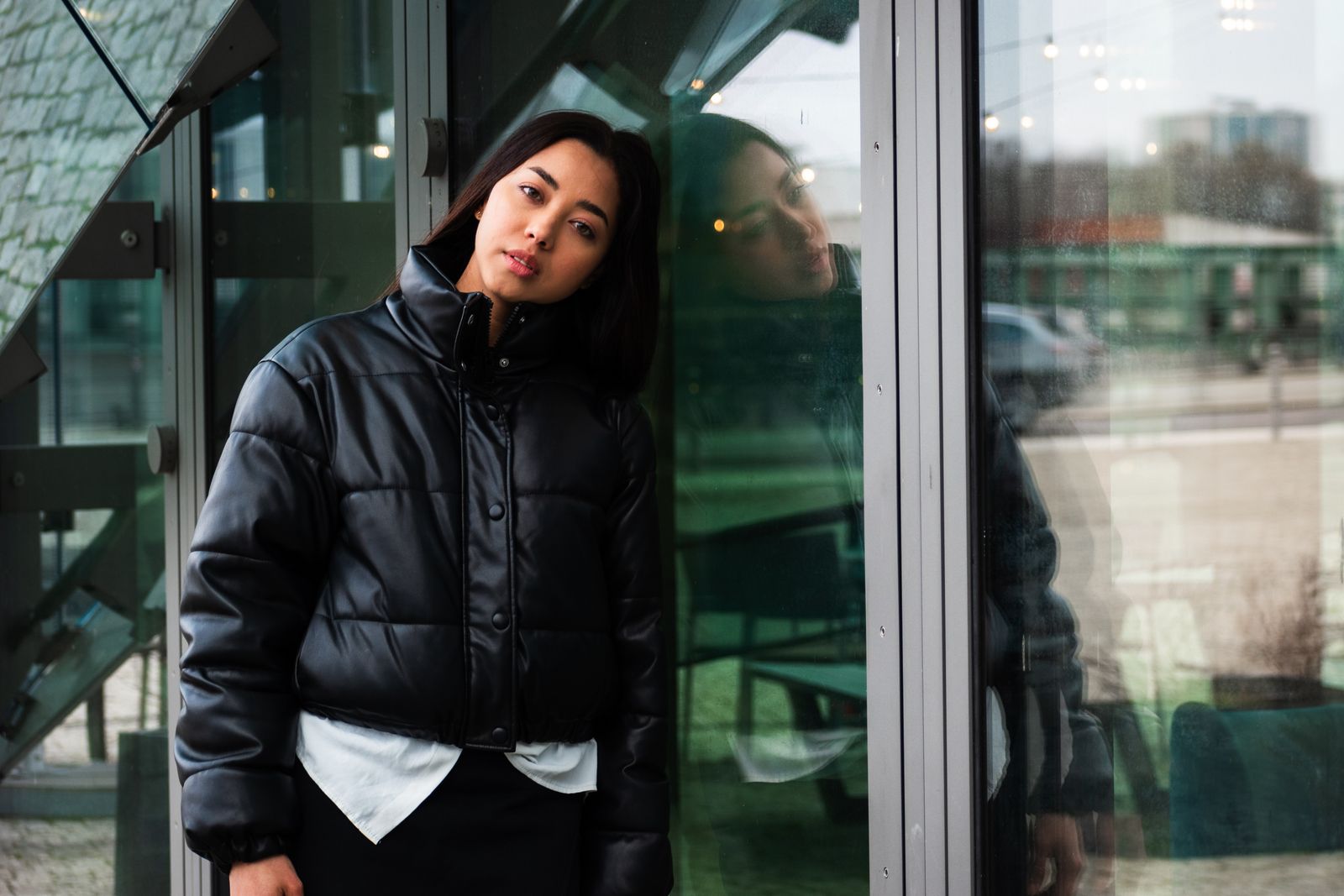
| Cropped Boxy Puffer View on Amazon → | Pairing with high-waisted jeans, wide-leg pants and midi skirts |
| Belted Puffer Coat View on Amazon → | Women who want a puffer with more shape and a dressier look |
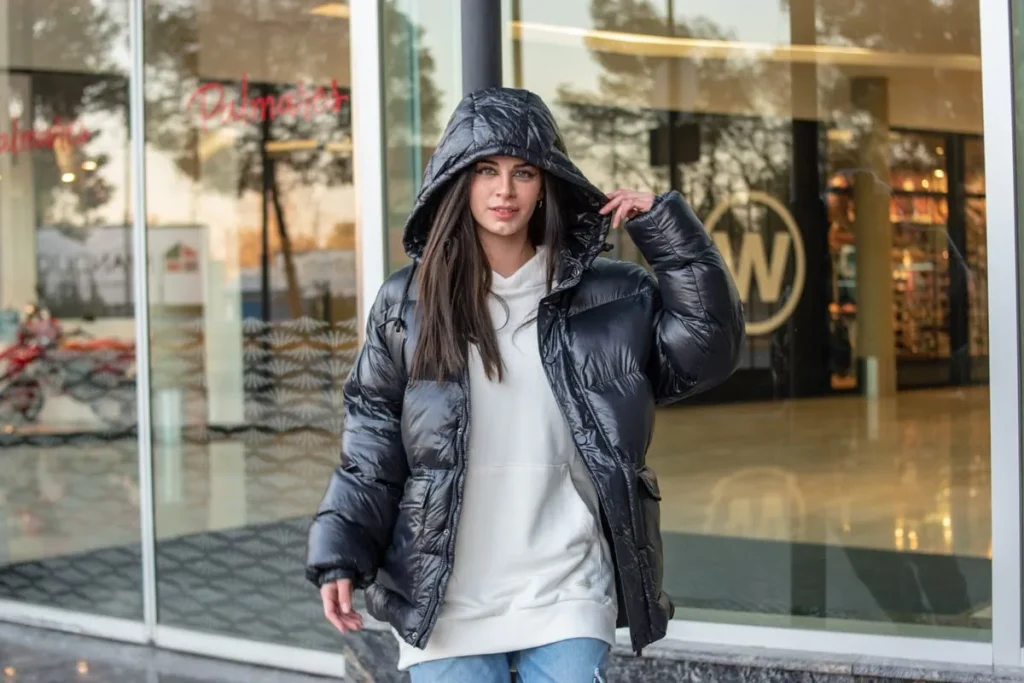
| Glossy High-Shine Puffer View on Amazon → | Anyone who wants an eye-catching jacket for nights out and weekends |
| Quilted Puffer Vest View on Amazon → | Layering over sweaters, under coats and during active fall days |
| Hip-Length Fitted Puffer View on Amazon → | Petite women |
| Matte Quilted Puffer Jacket View on Amazon → | First puffers, backup jackets |
The Best Puffer Jackets for Women to Consider
Best overall style
Mid-Length Quilted Puffer
Best for: everyday wear, school runs and anyone who wants one puffer that does it all
Why we recommend it: A puffer that ends around the upper thigh covers your hips without getting in the way when you sit or drive. Medium-width baffles look balanced rather than bulky, and a hood adds coverage on windy days. It works with jeans, leggings and casual dresses.
Key features to look for
- An insulated, lined body; check the listing for the warmth or temperature details
- A water-resistant shell and a zip garage at the chin
- Zippered hand pockets that keep your phone secure
Pros
- Balanced length for daily wear
- Easy to pair with most casual outfits
- Hood adds coverage when the weather turns
Cons / limitations
- More casual than a wool coat for the office
- Puffier styles can feel bulky in a car seat
Best for commuting
Long Hooded Puffer Coat
Best for: long waits outdoors, walking commutes and snowy, windy cities
Why we recommend it: A knee-length or longer puffer covers your thighs as well as your torso, which makes a real difference at bus stops and on long walks. Look for a two-way zipper so you can open the hem for easier strides and sitting, plus a hood that fits over a hat.
Key features to look for
- A two-way zipper for walking and sitting
- Side slits or a back vent for easier movement
- Inner wind cuffs and an adjustable hood
Pros
- The most coverage of any puffer style
- Practical for long periods outdoors
Cons / limitations
- Can feel too warm on trains and in shops
- Long hems pick up slush and road salt
Best for travel
Packable Lightweight Puffer
Best for: travelers, layering under a shell and unpredictable fall and spring days
Why we recommend it: Thin, lightweight puffers squash down into their own pocket or a small pouch, so they fit easily in a carry-on or a travel crossbody bag. Thin baffles keep the look slim enough to wear under a raincoat or a roomier winter coat.
Key features to look for
- A stuff sack or a pocket the jacket packs into
- Narrow baffles for a slim fit
- A lightweight shell that resists light drizzle
Pros
- Packs small and weighs very little
- Works as a layer in several seasons
Cons / limitations
- Not enough on its own for deep winter cold
- Thin shells can snag on zippers and hook-and-loop closures
Best cropped style

Cropped Boxy Puffer
Best for: pairing with high-waisted jeans, wide-leg pants and midi skirts
Why we recommend it: A cropped puffer ends near the waist with a boxy, oversized shape, which balances fuller bottoms and shows off a high waistline. It is a playful, fashion-forward take on the classic and looks especially good with chunky sneakers or boots.
Key features to look for
- A high, stand-up collar that blocks wind
- Elastic or drawcord hem to seal out drafts
- Generous baffles for a bold silhouette
Pros
- Modern, fashion-forward shape
- Looks great with high-rise bottoms
Cons / limitations
- Leaves the lower back and hips exposed
- Boxy cuts can look wide on very small frames
Best for a defined waist
Belted Puffer Coat
Best for: women who want a puffer with more shape and a dressier look
Why we recommend it: A belt or cinched waist turns a puffer from sporty to polished, giving you shape without giving up the cozy insulation. Longer belted styles look sharp over knit dresses and with tall boots.
Key features to look for
- A belt with loops, or a sewn-in drawcord waist
- Slimmer baffles through the waist area
- A mid or long length for the most flattering line
Pros
- Adds shape to a puffy style
- Dressier than a standard puffer
Cons / limitations
- Belts can feel stiff over thick layers
- Belting may compress insulation at the waist
Best statement style
Glossy High-Shine Puffer
Best for: anyone who wants an eye-catching jacket for nights out and weekends
Why we recommend it: A glossy or metallic finish catches the light and makes a simple black outfit look styled. Many glossy shells also shed snowflakes and light rain easily, though you should check the listing for water-resistance details.
Key features to look for
- A smooth, even shine without visible creasing
- A soft inner lining so the shell does not feel cold
- Neutral or deep jewel tones for easier styling
Pros
- Instant statement with little effort
- Shiny shells wipe clean easily
Cons / limitations
- Can look loud for professional settings
- Shine may show scuffs and creases over time
Best for layering
Quilted Puffer Vest
Best for: layering over sweaters, under coats and during active fall days
Why we recommend it: A puffer vest keeps your core cozy while leaving your arms free, which makes it handy for walks, errands and chilly offices. It layers easily over a sweater or flannel, and it can go under a long coat for extra insulation.
Key features to look for
- A high collar and snap or zip front
- Hand pockets with a soft lining
- A hip length that covers your waistband
Pros
- Freedom of movement for active days
- Easy layer across several seasons
Cons / limitations
- No sleeves, so not enough for cold days alone
- Can look bulky under fitted coats
Best for petite frames
Hip-Length Fitted Puffer
Best for: petite women and anyone who finds long or oversized puffers overwhelming
Why we recommend it: A fitted cut with narrower baffles keeps the shape trim, and a hip length avoids swamping a shorter frame. Petite sizing, where offered, also brings the sleeves and shoulders in proportion.
Key features to look for
- Petite sizing or shorter sleeve lengths
- Narrow or diagonal quilting for a slimmer look
- A shaped waist seam or side panels
Pros
- Balanced proportions on shorter frames
- Easier to layer over than bulky styles
Cons / limitations
- Less coverage than a longer puffer
- Fitted cuts leave less room for thick sweaters
Best budget pick
Matte Quilted Puffer Jacket
Best for: first puffers, backup jackets and anyone shopping on a tighter budget
Why we recommend it: A simple matte puffer with synthetic insulation covers the basics, and budget-friendly options are easy to find. The flat finish looks understated and pairs easily with most outfits. Check the seams and zipper quality before buying.
Key features to look for
- Even, well-stitched baffles with no thin spots
- A sturdy main zipper with a chin guard
- A machine-washable shell where possible
Pros
- Friendly price for a practical jacket
- Matte finish goes with almost everything
Cons / limitations
- Insulation may flatten sooner than pricier fills
- Fewer weather-resistant details

How to Style a Puffer Jacket

Puffers can look polished, sporty or playful depending on what you pair them with. Try these outfit ideas.
- Weekend casual: A mid-length matte puffer over a hoodie, straight-leg jeans and chunky sneakers is an easy, cozy uniform. Add a beanie in a contrasting color.
- City commute: Wear a long hooded puffer over trousers and a fine knit, with lined ankle boots and a tote. Unzip the lower hem when you sit.
- Cold-weather workout or walk: Layer a puffer vest over a fitted thermal top and fleece-lined leggings, then finish with sneakers and a headband.
- Night out: Pair a glossy or belted puffer with a sweater dress, sheer tights and knee-high boots so the jacket becomes part of the outfit.
How to Choose a Puffer Jacket
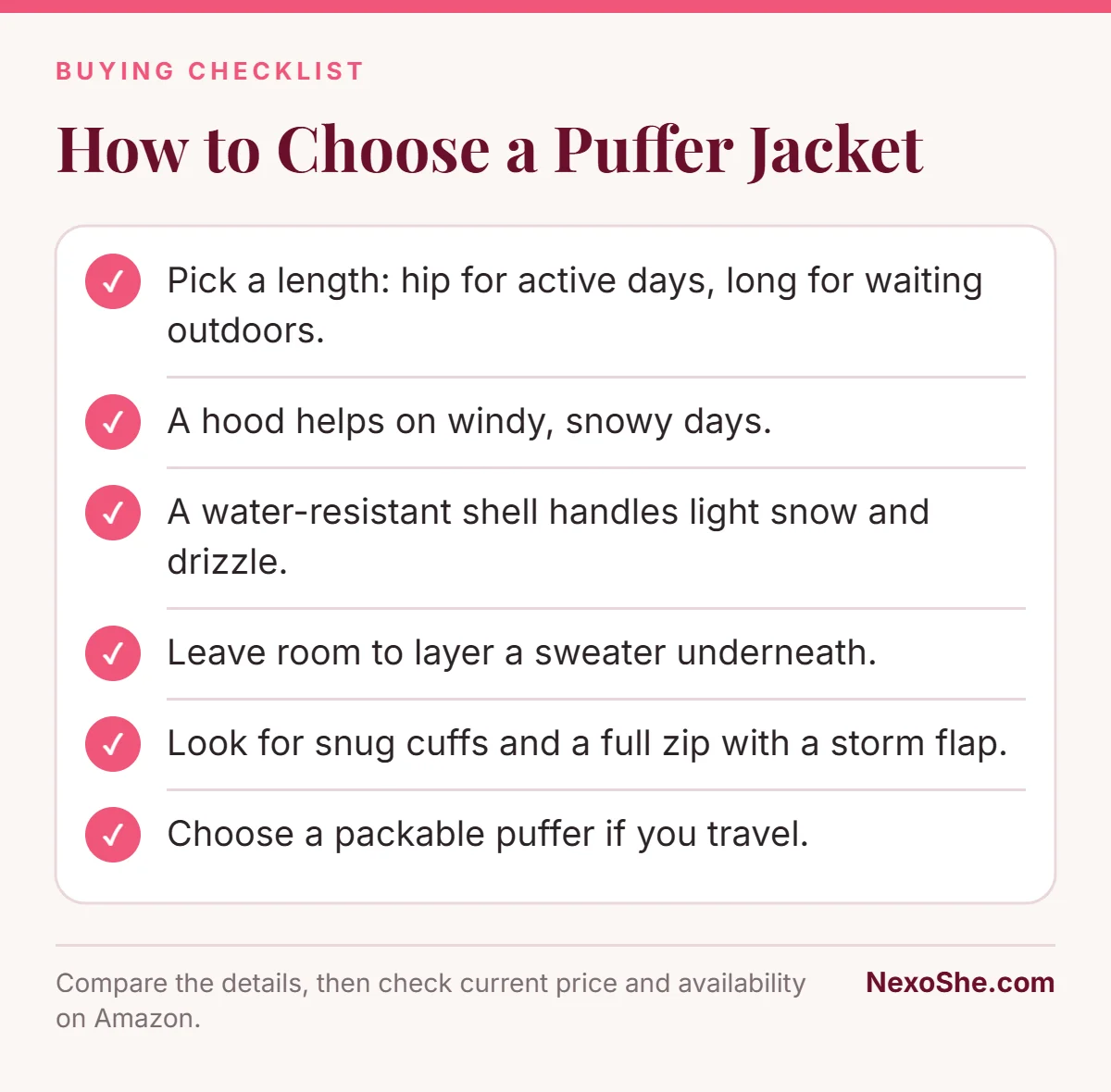
Insulation. Puffers use either down or synthetic fill. Down feels lightweight and compresses well, and fill details are usually listed on the product page. Synthetic insulation stays lofty in damp weather and is often easier to wash. For cold climates, check the listing for the warmth or temperature details rather than going by looks alone.
Shell and weather resistance. A water-resistant shell helps shed snow and light rain. Glossy finishes often shed moisture easily, while matte nylon looks more understated. If a listing says waterproof, check the listing for taped seams and the details behind that claim.
Sizing and fit. Try puffers over the layers you will actually wear, such as thermal base layers or a sweater. You should be able to reach forward and lift your arms without the hem riding up. Many buyers suggest sizing up in fitted styles if you layer heavily, but oversized cuts are usually designed to be worn in your normal size. Always read the size chart for each listing.
Care. Check the care label first. Many puffers can be machine washed on a gentle cycle with a mild detergent, then tumble dried on low, sometimes with clean dryer balls to help restore loft. Store puffers hanging or loosely folded rather than tightly compressed for long periods.
Curious how we put guides like this together? Read how we choose products.
How to Care for a Puffer Jacket
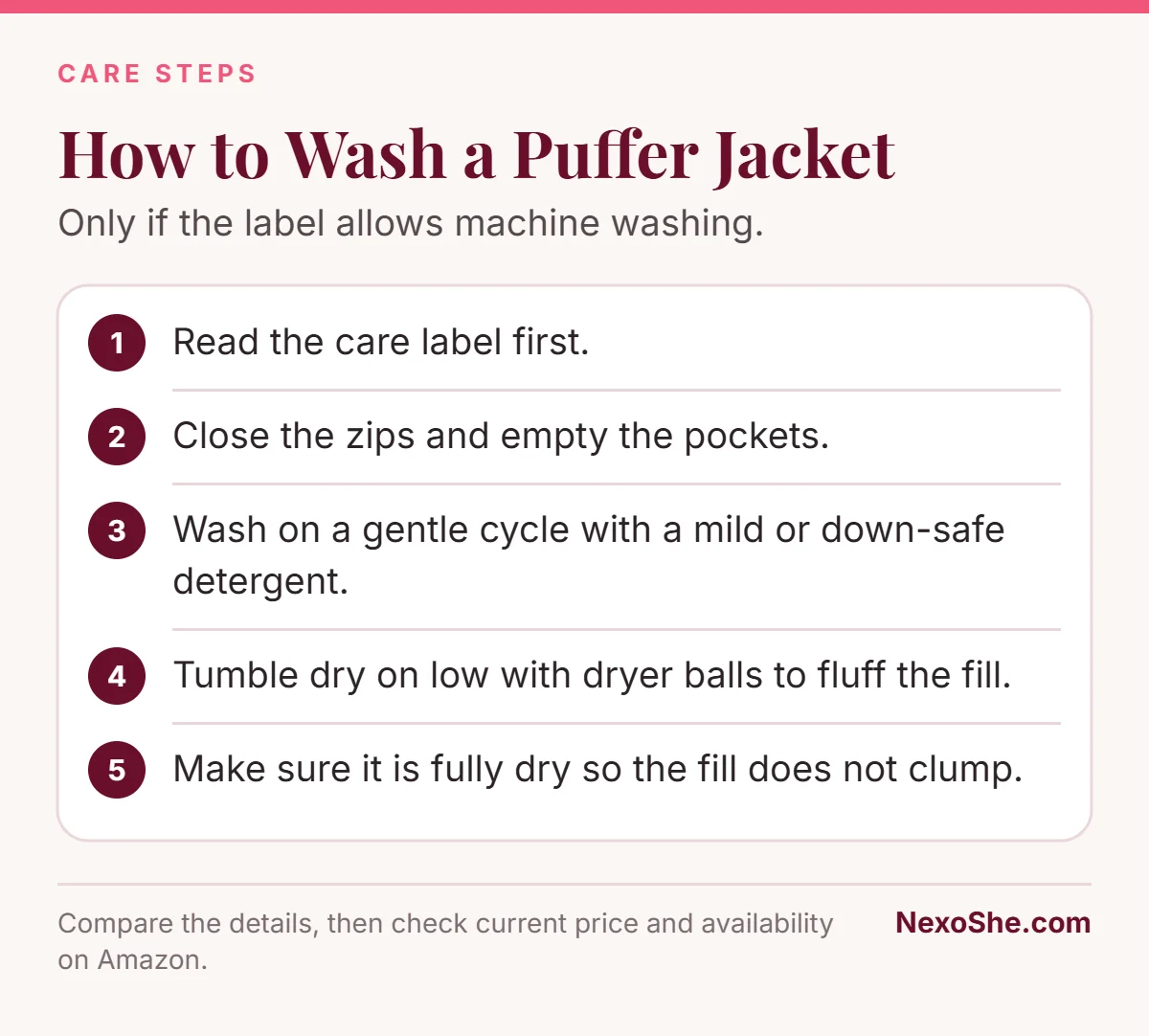
Most puffer jackets can be machine-washed, but check the label first. Close all zips, wash on a gentle cycle with a mild detergent or a down-specific wash, and rinse well. Tumble dry on low with a few clean tennis balls or dryer balls, which break up clumps of filling and restore the loft. It can take a couple of cycles for down to dry fully. Store puffers loosely on a hanger rather than compressed for long periods.
- Spot clean small marks to reduce full washes.
- Avoid fabric softener, which can coat the filling.
- Repair small tears quickly with a fabric patch to stop filling escaping.
Down vs Synthetic Fill
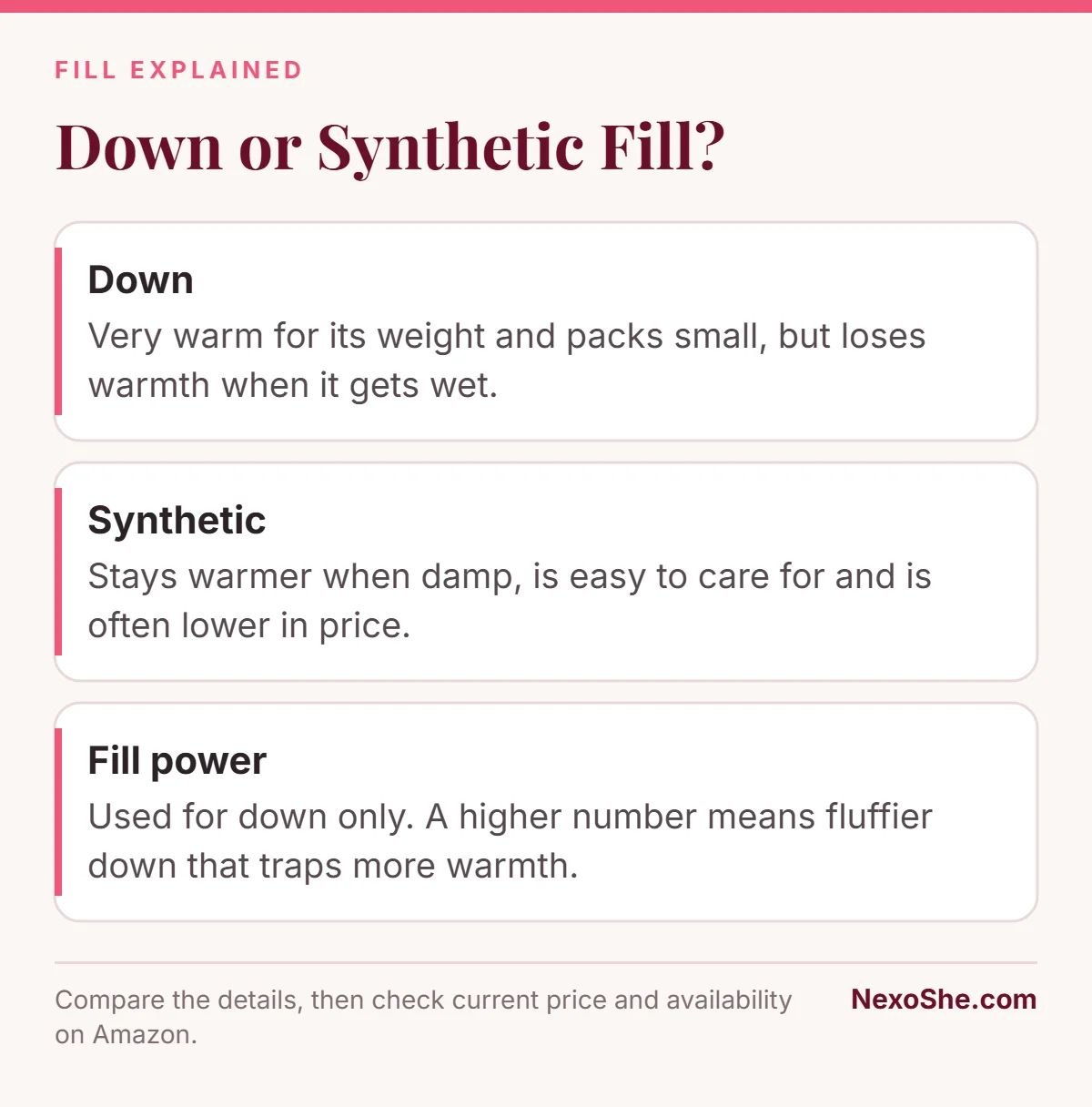
Down is very warm for its weight and packs small, but it loses warmth when wet. Synthetic fill stays warmer when damp and is often easier to wash, which suits rainy climates and everyday wear.
How we chose these picks: We compared Amazon product listings, brand information and patterns in recent customer feedback to match each pick to a specific need. We have not personally tested every product. Prices, deals and availability change often, so check the current details on Amazon before you buy. Graphics on this page are original NexoShe illustrations; photos are from Pexels.
Got Questions?
Frequently Asked Questions
Is a puffer jacket warm enough for winter?
Many puffers are designed for winter, but warmth varies with the fill, length and construction. Longer, hooded styles offer more coverage than cropped ones. Check the listing for the warmth or temperature details if you live somewhere very cold.
Should I choose down or synthetic insulation?
Down feels light and packs down small, which suits dry cold and travel. Synthetic fill stays lofty in damp conditions, is often easier to wash and is usually more budget-friendly. Choose based on your climate and how much care you want to put in.
Should I size up in a puffer jacket?
Only if the cut is fitted and you plan to wear thick sweaters underneath. Oversized and boxy styles already have room for layers. Compare the size chart with a jacket you already own before ordering.
How do I fluff up a flat puffer jacket?
After washing, tumble dry it on low heat with clean dryer balls, stopping now and then to break up clumps by hand. Make sure it is fully dry before storing. Between wears, a gentle shake helps the insulation spread out again.
More from NexoShe
Still deciding between styles? Compare wool, wrap and parka options in our guide to the best winter coats for women, then keep your feet covered with the best winter boots for women.