Best Walking Shoes for Women: 7 Styles for Every Kind of Walker
Walking is the easiest daily exercise, and the right shoes make it far more comfortable. A good walking shoe is cushioned, flexible at the front, stable at the heel and roomy enough for your toes. This guide covers seven styles of walking shoes for women, including options for wide feet and walkers over 50, plus how to get the right fit. These are the best walking shoes for women, from daily walkers to trail pairs.
NexoShe is reader-supported. As an Amazon Associate I earn from qualifying purchases. When you buy through links on our site, we may earn a commission at no extra cost to you. Read our full affiliate disclosure, written in line with the FTC Endorsement Guides.
How to Get the Right Fit
- Shop later in the day, when feet are slightly larger.
- Leave a thumb’s width of space in front of your longest toe.
- Check the width. Many brands offer wide (D) and extra-wide (2E) sizes for women.
- Wear your walking socks when you try them on.
- Replace them when the cushioning feels flat or the tread is worn, often after several hundred miles.
| Style | Best for |
|---|---|
| Cushioned Everyday Walking Shoes View on Amazon → | Daily walks on sidewalks and paths |
| Wide-Fit Walking Shoes View on Amazon → | Wide feet, bunions or swelling later in the day |
| Walking Shoes With Extra Stability View on Amazon → | Walkers who want more support, often including many women over 50 |
| Slip-On Walking Shoes View on Amazon → | Easy on and off, travel days and errands |
| Walking Sneakers That Look Casual View on Amazon → | Walking around town and travel days in normal clothes |
| Trail Walking Shoes View on Amazon → | Gravel paths, parks and light hiking |
| Water-Resistant Walking Shoes View on Amazon → | Rainy climates and winter walks |
1. Cushioned Everyday Walking Shoes
Best for: daily walks on sidewalks and paths.
What to look for: a soft midsole, a padded heel collar and a flexible forefoot.
Check before you buy: that the heel feels stable and does not slip.
2. Wide-Fit Walking Shoes
Best for: wide feet, bunions or swelling later in the day.
What to look for: true wide or extra-wide sizing and a roomy, rounded toe box.
Check before you buy: that the shoe comes in a real wide width, not just a “relaxed fit”.
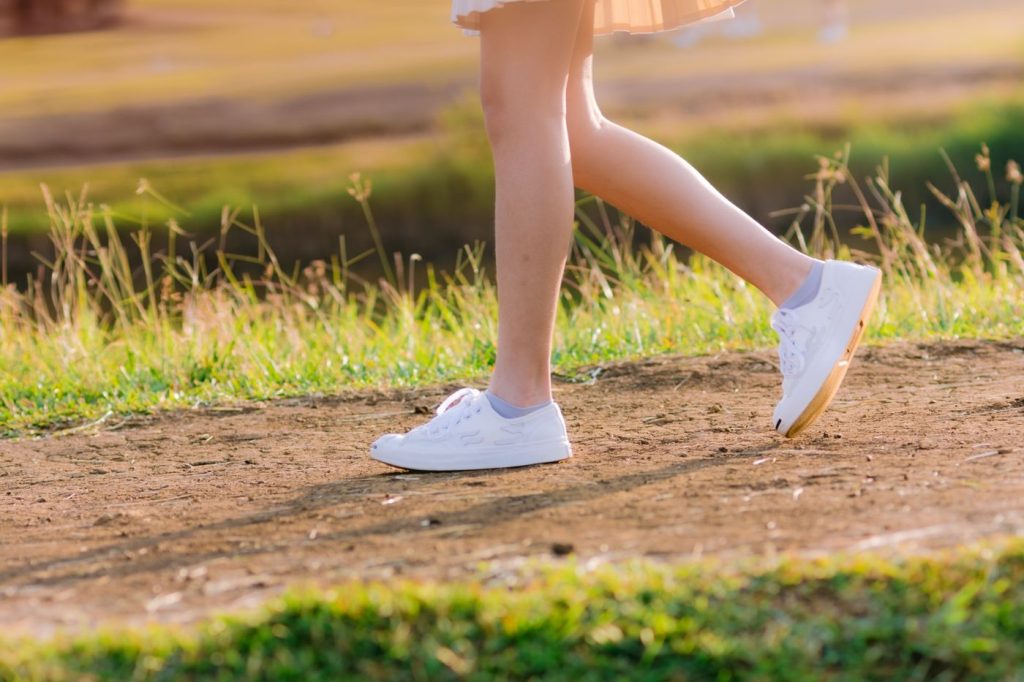
3. Walking Shoes With Extra Stability
Best for: walkers who want more support, often including many women over 50.
What to look for: a firm heel counter, a wider base and a supportive midsole.
Check before you buy: what support you need if you have foot or joint pain; a doctor or podiatrist can advise.
4. Slip-On Walking Shoes
Best for: easy on and off, travel days and errands.
What to look for: a stretchy knit upper, a heel pull tab and a cushioned sole.
Check before you buy: that the heel holds your foot without laces.
Skip it if: you walk long distances or on uneven ground.
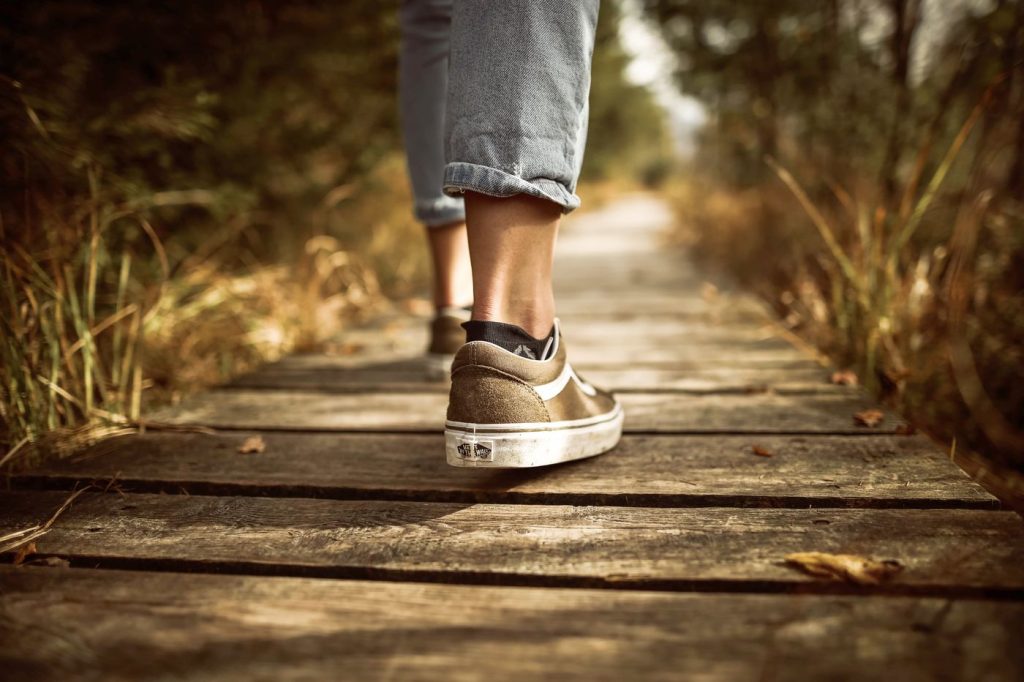
5. Walking Sneakers That Look Casual
Best for: walking around town and travel days in normal clothes.
What to look for: a clean leather or knit upper with a cushioned walking sole. Pair them with ideas from how to wear white sneakers.
Check before you buy: that “fashion” sneakers still have real cushioning.
6. Trail Walking Shoes
Best for: gravel paths, parks and light hiking.
What to look for: a lugged rubber outsole and a protective toe.
Check before you buy: whether you need a water-resistant version for wet trails.
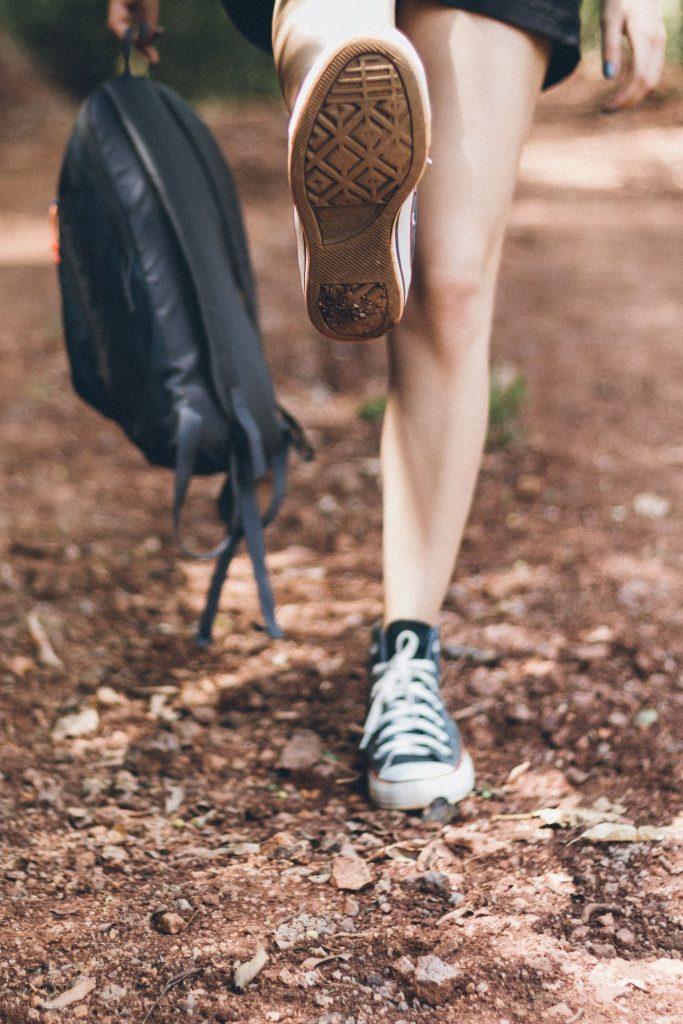
7. Water-Resistant Walking Shoes
Best for: rainy climates and winter walks.
What to look for: a water-resistant upper and a grippy outsole.
Check before you buy: that they still breathe; fully waterproof shoes can feel warm.
Walking Shoes vs Running Shoes
Running shoes are built for a different stride and often have more cushioning under the forefoot. Walking shoes tend to be flatter and more stable, with a flexible front. Many people walk comfortably in running shoes; the most important thing is a comfortable fit.
Shop the Best Walking Shoes for Women
Prices, sizes and availability change often, so check the current details, size chart and the return policy on Amazon before you buy.
Understanding Walking Shoe Features
A few key features make the biggest difference in comfort. The midsole is the cushioning layer between the outsole and your foot; foam midsoles absorb impact on pavement. The heel counter is the stiff cup around your heel that keeps your foot stable. The toe box is the front of the shoe; a wide, rounded toe box gives toes room to spread as you walk. Heel-to-toe drop is the height difference between heel and forefoot; many walking shoes have a moderate drop that feels natural. Flexibility at the ball of the foot lets your foot roll smoothly from heel to toe.
- Midsole: cushioning and comfort.
- Heel counter: stability.
- Toe box: room for toes.
- Flex point: smooth stride.
How to Test Walking Shoes
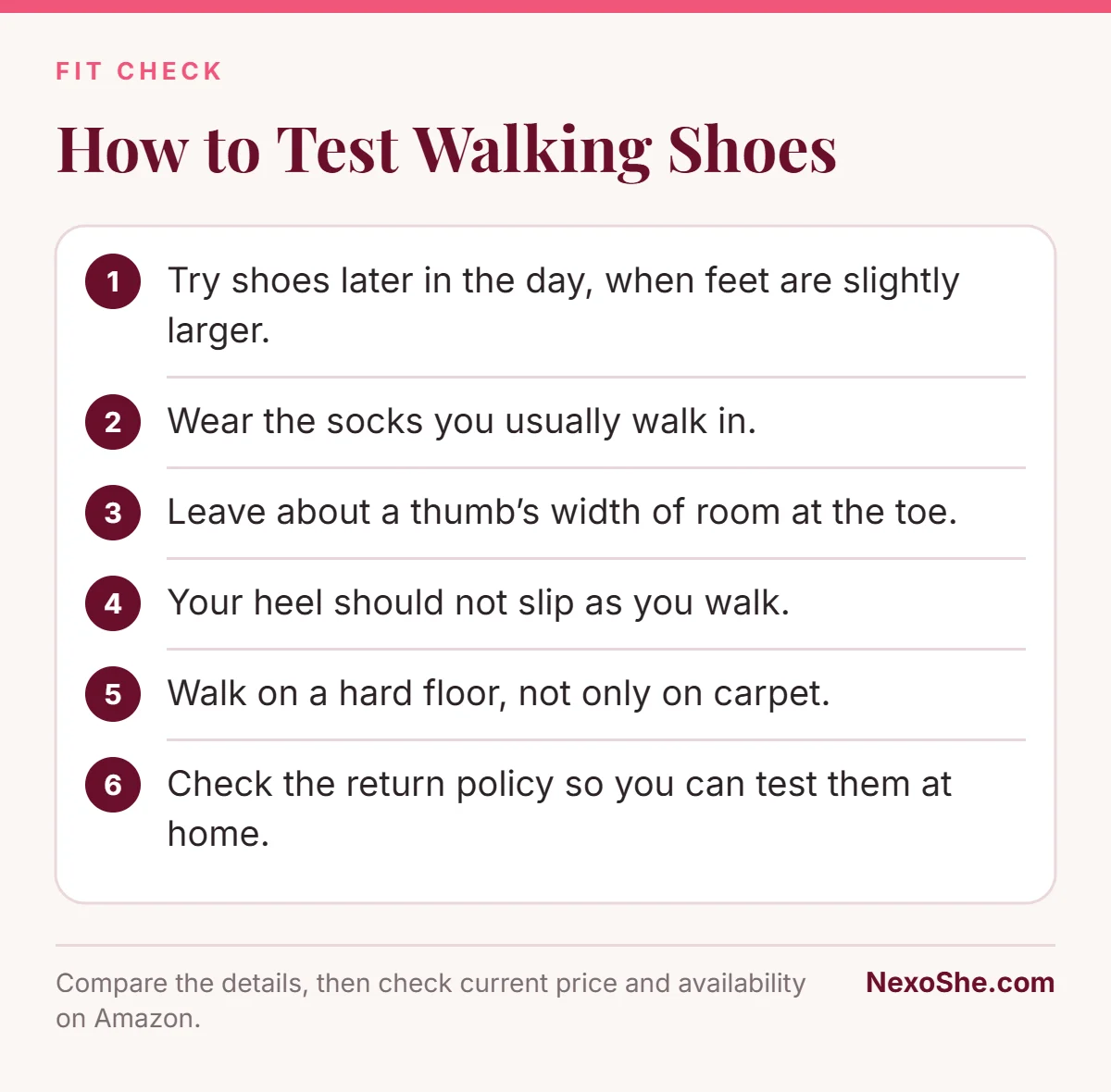
Before you keep a new pair, test them at home on a clean floor. Walk for at least ten minutes, including up and down stairs. Your heel should not slip, your toes should not touch the front, and nothing should rub or pinch. Press the toe box to check there is about a thumb’s width of space in front of your longest toe. Twist the shoe gently; it should bend at the ball of the foot, not in the middle of the arch. If anything feels uncomfortable straight away, it is unlikely to improve with wear.
Building Up Your Walking Routine
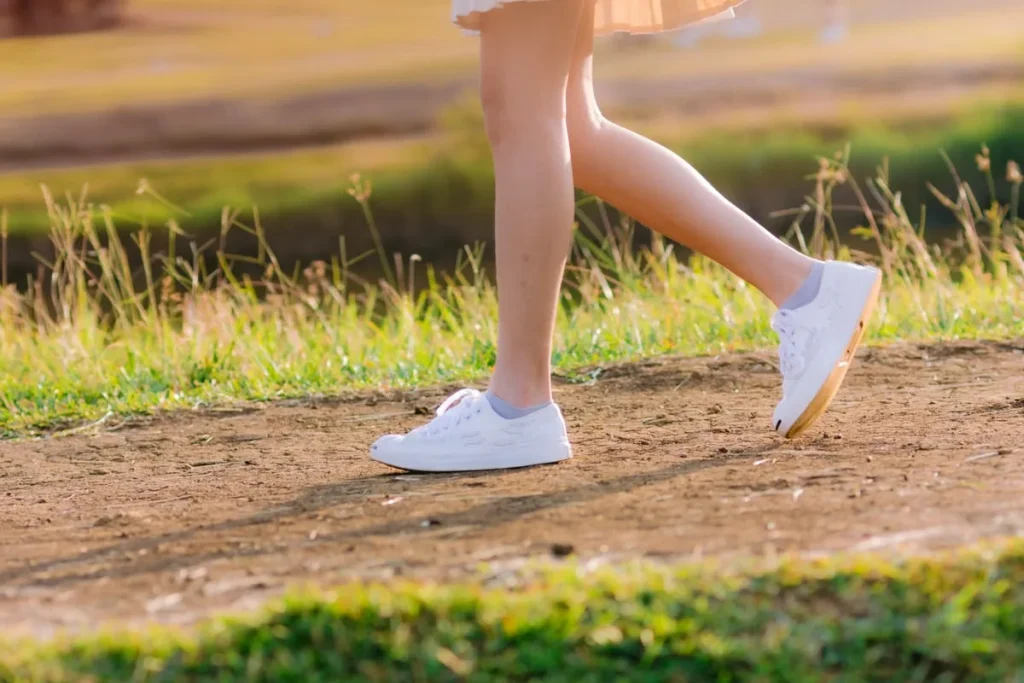
If you are new to regular walking, start with shorter walks of 15 to 20 minutes and gradually increase time and distance over a few weeks. Wear moisture-wicking socks to reduce blisters, and keep a steady, comfortable pace where you can still hold a conversation. Mixing flat routes with gentle hills builds strength. If you have health concerns, check with a doctor before starting a new exercise routine.
Socks Matter Too
The right socks make walking shoes feel better. Choose moisture-wicking synthetic or merino wool socks rather than cotton, which holds sweat and can cause blisters. Cushioned socks add comfort on long walks, while thin socks suit snug shoes. Seamless toes reduce rubbing. Try shoes on with the socks you plan to walk in, since sock thickness changes the fit.
Walking Shoes for Travel
Travel days often mean miles of walking through airports, museums and city streets. Choose a lightweight, cushioned walking shoe in a neutral color that works with travel outfits, and break it in before your trip. Slip-on styles make airport security easier. Pack blister plasters and a spare pair of socks in your day bag. See our travel crossbody bags and white sneaker outfits.
When to Replace Walking Shoes
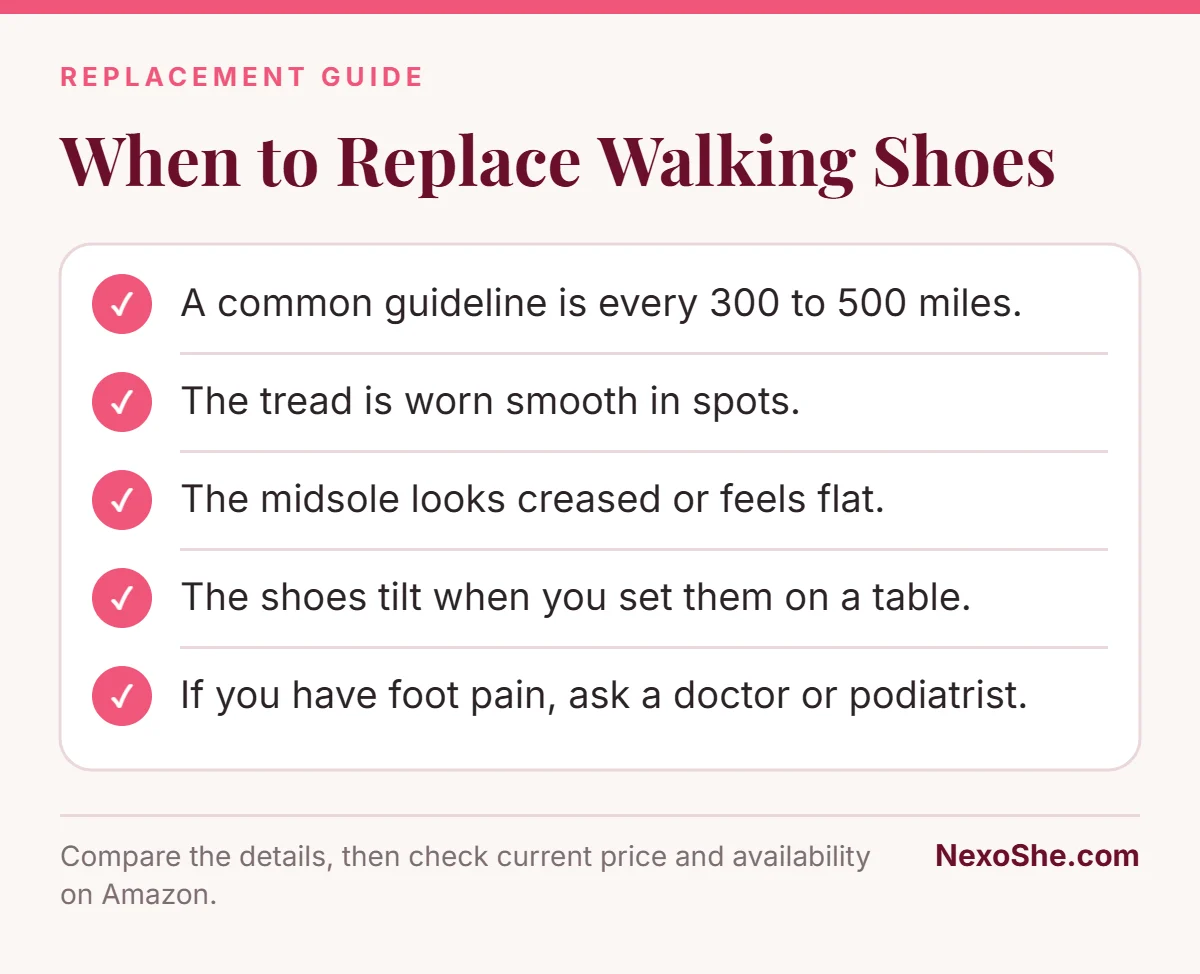
Walking shoes lose cushioning gradually, so it is easy to keep wearing them too long. Signs it is time for a new pair include flattened midsoles, worn-down treads, creases in the foam, a heel that leans to one side and new aches in your feet, knees or hips after walks. Many walkers replace shoes every few hundred miles. Rotating two pairs lets the foam recover between walks and can extend their life.
Walking Shoes for Different Surfaces
Pavement and sidewalks call for well-cushioned shoes to absorb impact. Treadmills and indoor tracks suit lighter, flexible shoes. Gravel paths and park trails need a grippy outsole and some protection at the toe. Wet or icy weather calls for water-resistant uppers and deeper treads, and in icy conditions you may need traction cleats or boots instead.
Walking Shoes vs Fashion Sneakers
Fashion sneakers are designed mainly for style, while walking shoes are designed for cushioning and support over distance. Many fashion sneakers have thin, flat soles that feel fine for short outings but uncomfortable after a few miles. If you want one pair for both, look for a lifestyle sneaker with a cushioned midsole, or add a supportive insole to your favorite pair. See our white sneakers for stylish options.
How to Clean Walking Shoes
Remove insoles and laces, brush off dried mud and wipe the uppers with a damp cloth and mild soap. Mesh uppers can be gently scrubbed with an old toothbrush. Let shoes air-dry at room temperature, stuffed with paper, rather than near a heater or in a dryer, which can warp the foam and weaken the glue. Wash insoles and laces separately.
Common Mistakes
Avoid these when buying and wearing walking shoes.
- Buying shoes in the morning, when feet are smallest.
- Choosing style over fit for long walks.
- Wearing cotton socks on long walks.
- Keeping shoes long after the cushioning is gone.
Final Tip
Take your current walking shoes with you when you shop, so you can compare the feel and check how the old pair has worn; the wear pattern on the sole can hint at what support you need.
Walking Shoes by Foot Type
Foot shape affects which walking shoes feel best, though personal comfort is always the final test.
- Wide feet: choose true wide (D) or extra-wide (2E) widths and a rounded, roomy toe box.
- Narrow feet: look for narrow widths or shoes with lacing that can be tightened without bunching.
- High arches: cushioned shoes that absorb impact often feel best.
- Flat feet: many people prefer stable shoes with a firmer midsole; a podiatrist can advise on support.
- Bunions: stretchy knit uppers and wide toe boxes reduce pressure.
Lacing Tricks for a Better Fit
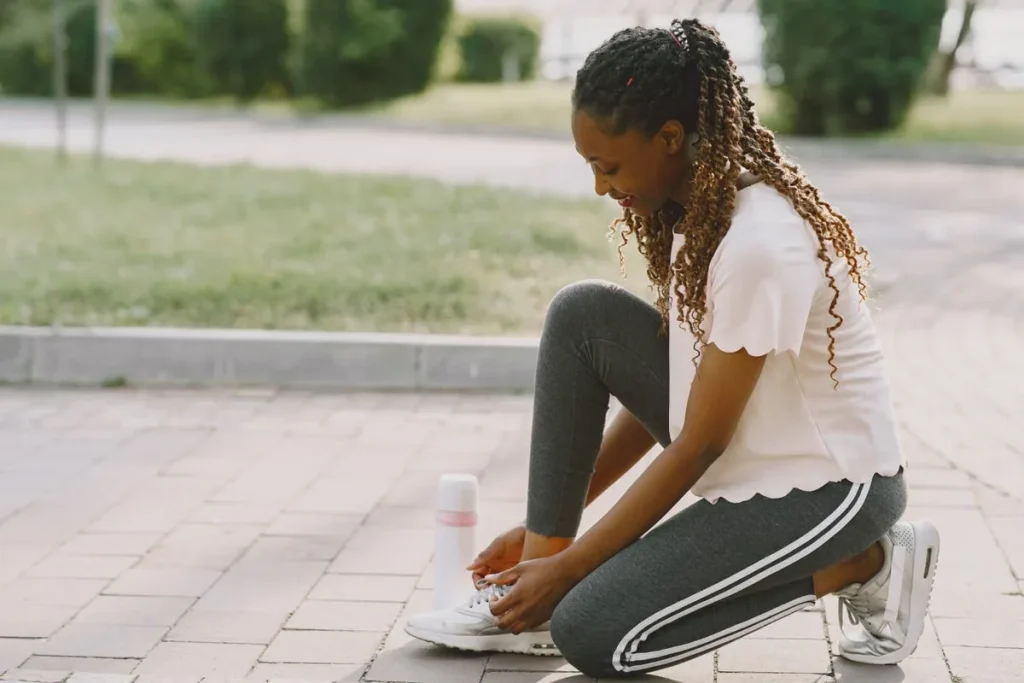
How you lace walking shoes can solve common fit problems. If your heel slips, use the extra top eyelet to create a heel-lock or runner’s loop, which holds the heel in place. If the top of your foot feels pressure, skip a pair of eyelets over the sore spot. For wide forefeet, loosen the lower laces and tighten the upper ones. Small changes like these can make a good shoe feel great.
Walking Shoes for Women Over 50
As we age, many people find that cushioning and stability matter more. Shoes with a stable heel, a slightly wider base, good traction and easy fastening, such as slip-on styles or hook-and-loop closures, can feel more comfortable and secure. Lightweight shoes reduce fatigue on longer walks. If balance or foot pain is a concern, a podiatrist or doctor can recommend features or orthotics.
Colors and Styles
Neutral colors such as black, gray, navy and white pair easily with leggings, joggers and jeans. Darker colors hide dirt on trails and city streets. Brighter shoes are easier to see in low light, and reflective details add safety for early-morning or evening walks.
Walking in Winter
Cold, wet and icy weather changes what you need. Choose water-resistant walking shoes with a grippy outsole for wet streets, and add warm, moisture-wicking socks. On icy days, switch to winter boots with deep treads or add removable traction cleats, and slow your pace. See our winter boots for snowy weather.
Quick Recap
Choose walking shoes for fit first, then cushioning, stability and grip for your usual routes, and replace them when the cushioning wears out.
Walking Shoes and Posture
Comfortable shoes support good walking posture: stand tall, look ahead rather than down, relax your shoulders and let your arms swing naturally. Shoes that pinch or slip can change the way you walk, so a good fit helps you move more naturally and comfortably on longer walks.
How we chose these picks: We compared Amazon product listings, brand information and patterns in recent customer feedback to match each pick to a specific need. We have not personally tested every product. Prices, deals and availability change often, so check the current details on Amazon before you buy. Graphics on this page are original NexoShe illustrations; photos are from Pexels.
Frequently Asked Questions
What should I look for in a walking shoe?
Good cushioning, a stable heel, a flexible front and enough room for your toes. Fit matters more than any feature.
What are good walking shoes for women over 50?
Many prefer stable, cushioned shoes with a roomy toe box and a supportive heel. If you have foot or joint issues, ask a doctor or podiatrist for advice.
Which walking shoes are best for wide feet?
Look for brands that offer true wide (D) or extra-wide (2E) women’s sizes and a rounded toe box.
How often should I replace walking shoes?
When the cushioning feels flat, the tread is worn or your feet start to ache after walks.
More from NexoShe
See also our shoes for standing all day, white sneakers and comfortable flats.
Find more shoe guides on the NexoShe Shoes page and the Fashion page.
Photos: Pexels. Our picks are shoe styles chosen from our research, not personal product tests. Check sizing, materials and return policies on Amazon before you buy. For foot pain or medical conditions, ask a doctor or podiatrist.