7 Vintage Fashion Trends From the 70s, 80s and 90s That Still Work
Fashion keeps borrowing from the 1970s, 1980s and 1990s, and many of those pieces are easy to wear today. The trick is to pick one vintage-inspired piece and style everything else in a modern way, so the outfit looks current rather than like a costume. Here are seven vintage fashion trends that work in an everyday wardrobe, with a styling rule for each.
NexoShe is reader-supported. As an Amazon Associate I earn from qualifying purchases. When you buy through links on our site, we may earn a commission at no extra cost to you. Read our full affiliate disclosure, written in line with the FTC Endorsement Guides.
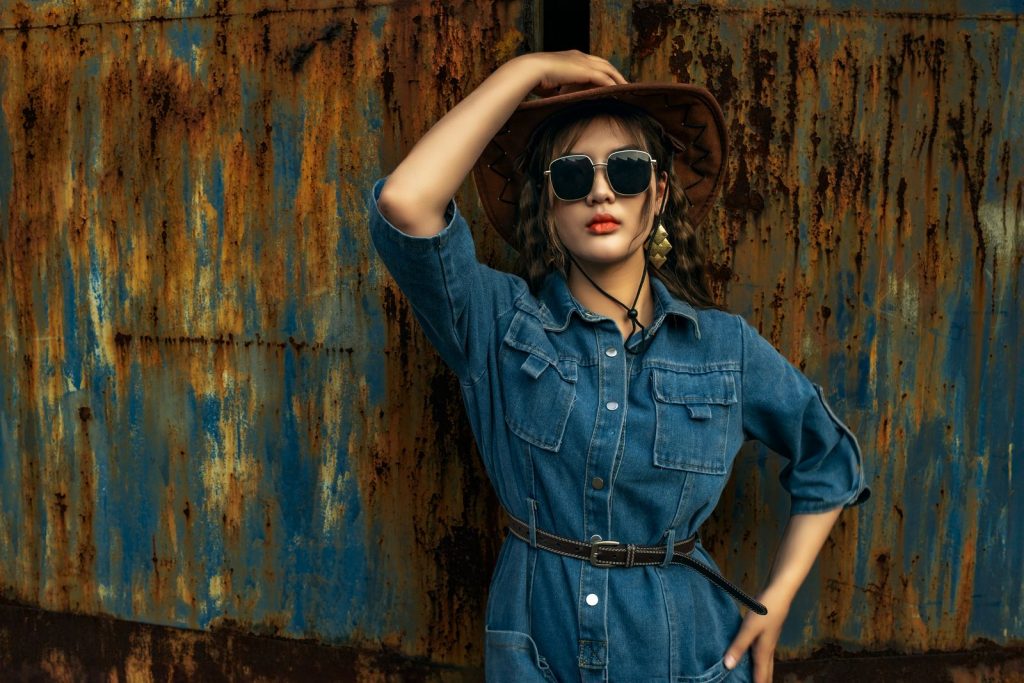
| Outfit | The pieces |
|---|---|
| The Suede Jacket | A tan or brown suede or faux-suede jacket, often with a shirt collar or fringe. |
| Flares and Bootcut Jeans | High-rise flared or bootcut jeans worn long over heels or boots. |
| The Wrap Dress | A knee- or midi-length dress that wraps and ties at the waist, often in a print. |
| Knee-High Boots | Tall leather or suede boots worn with skirts and dresses. |
| The Strong-Shoulder Blazer | An oversized blazer with structured shoulders, often double-breasted. |
| The Slip Dress | A bias-cut satin midi dress with thin straps. |
| Straight Jeans and Minimalism | Straight-leg jeans, a fitted tee or tank, a long coat and minimal gold jewelry. |
The 1970s
1. The Suede Jacket
The pieces: a tan or brown suede or faux-suede jacket, often with a shirt collar or fringe.
Why it works: Warm brown suede adds texture and pairs with denim, knits and boots.
Fit rule: Wear it with simple straight jeans and a plain tee; skip fringe if you want it to read as modern.
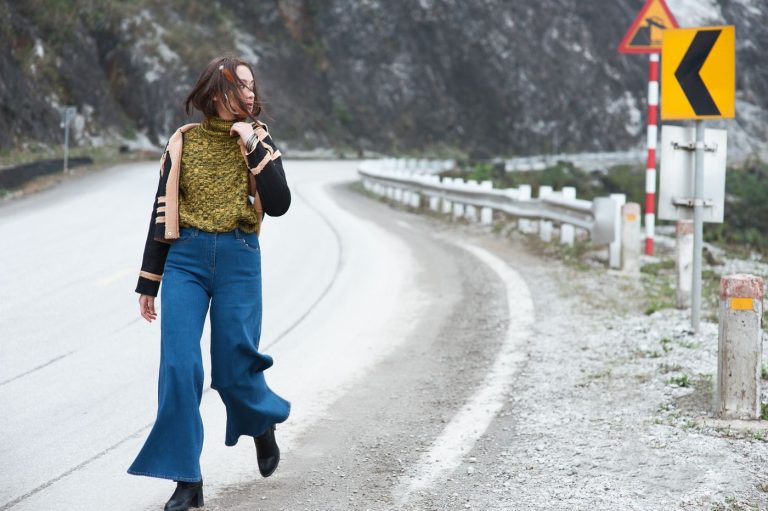
2. Flares and Bootcut Jeans
The pieces: high-rise flared or bootcut jeans worn long over heels or boots.
Why it works: They lengthen the leg and balance fitted tops and bodysuits.
Fit rule: The hem should nearly touch the floor with your shoes on. Pair them with a fitted knit or a bodysuit.
3. The Wrap Dress
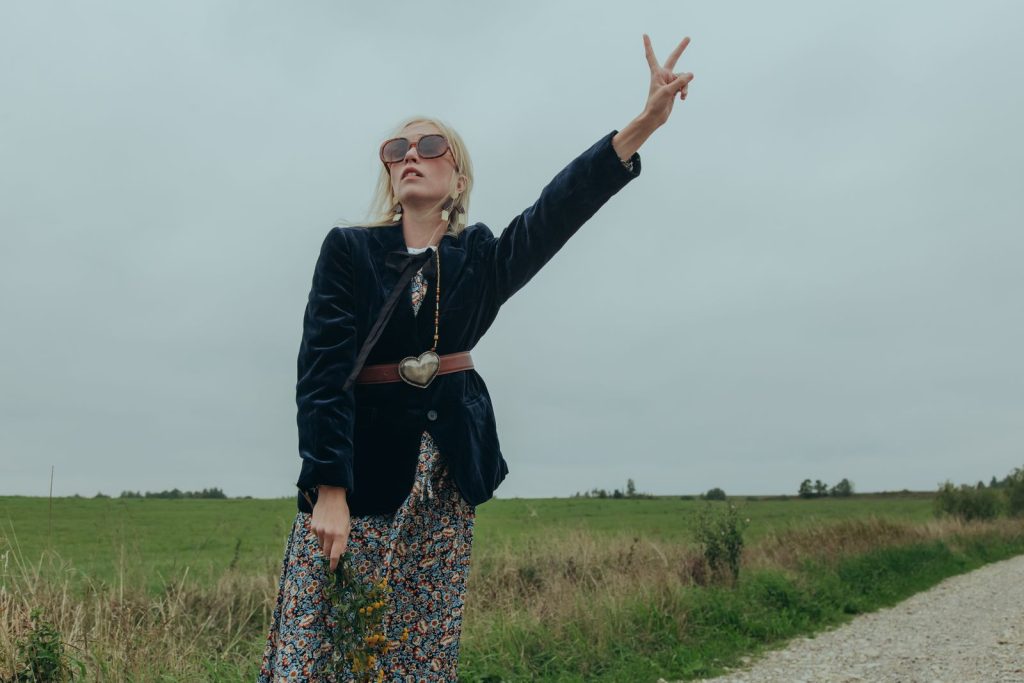
The pieces: a knee- or midi-length dress that wraps and ties at the waist, often in a print.
Why it works: It flatters many shapes, works from office to dinner and is easy to wear with boots in winter.
Fit rule: Check that the wrap is deep enough to stay closed; a hidden snap at the neckline helps.
4. Knee-High Boots
The pieces: tall leather or suede boots worn with skirts and dresses.
Why it works: They carry a 1970s feel and make dresses wearable in cold weather. See our knee-high boot guide.
Fit rule: The boot top should meet or slip under the hem of a midi skirt.
The 1980s
5. The Strong-Shoulder Blazer
The pieces: an oversized blazer with structured shoulders, often double-breasted.
Why it works: It adds instant confidence and turns jeans and a tee into an outfit.
Fit rule: Keep everything else slim, such as straight jeans or a slip skirt, so the shoulders stay the focus.
Skip it if: you have broad shoulders and want a softer look. Choose a relaxed single-breasted blazer instead.

The 1990s
6. The Slip Dress
The pieces: a bias-cut satin midi dress with thin straps.
Why it works: It is the most versatile vintage piece: with a tee underneath for day, with heels for evening and with a knit and boots in winter.
Fit rule: Size up if satin clings; a smooth, seamless layer underneath also helps.
7. Straight Jeans and Minimalism
The pieces: straight-leg jeans, a fitted tee or tank, a long coat and minimal gold jewelry.
Why it works: The 1990s minimal look is easy and timeless because it relies on fit, not trends. Add a dainty gold necklace.
Fit rule: Stick to neutrals like black, white, camel and gray.
How to Wear Vintage Without Looking Costumey
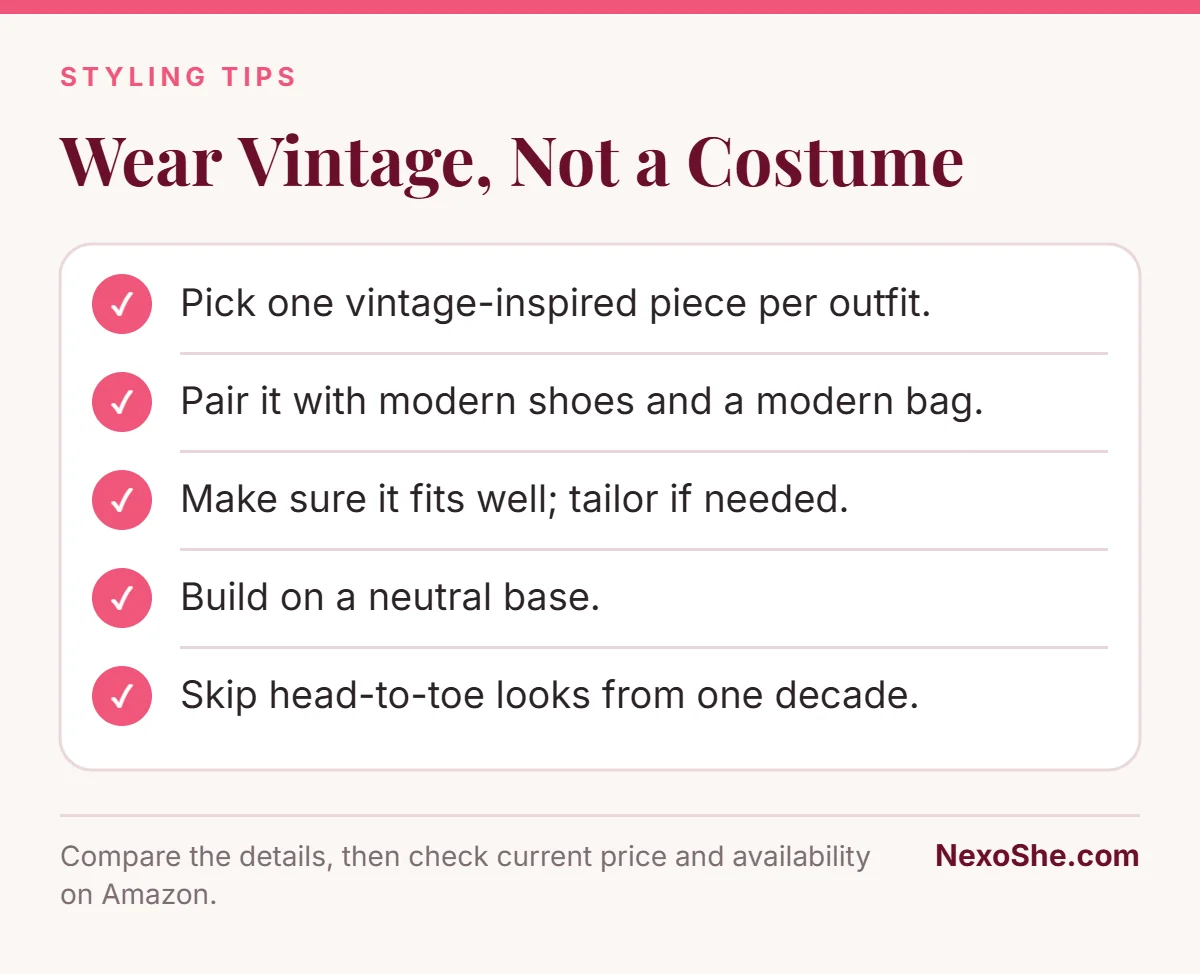
- One vintage piece per outfit. Pair a 70s jacket with modern jeans, not flares and platforms together.
- Modern shoes and bag. Clean sneakers, loafers or a simple bag bring the look up to date.
- Tailor it. Thrifted pieces often need a hem or waist adjustment to look intentional.
Shop the Pieces
Prices, sizes and availability change often, so check the current details and the return policy on Amazon before you buy.
Why Vintage-Inspired Fashion Keeps Coming Back
Fashion moves in cycles, and styles from past decades regularly return with small modern updates. Designers and shoppers revisit older silhouettes because they have already proven they work: a wrap dress, a pair of flared jeans or a slip dress looks as good today as when it first became popular. Vintage-inspired pieces also feel personal and a little different from the newest trends.
Wearing vintage-inspired clothing is also a way to build a wardrobe of classic shapes that do not date quickly. Many of the pieces in this guide have stayed in style, in some form, for decades.
The 1950s: Fitted Waists and Full Skirts
The 1950s are remembered for defined waists and feminine shapes. Full circle and pleated skirts, fitted cardigans, button-front blouses, capri pants and ballet flats all trace back to this era. Today, a pleated midi skirt with a fitted knit and a belt gives a gentle 1950s feel without looking like a costume.
Gingham, polka dots and soft pastels are easy ways to add a hint of the decade to modern outfits.
The 1960s: Shift Dresses and Graphic Style
The 1960s brought shorter hemlines, simple shift dresses, A-line mini skirts, bold graphic prints and knee-high boots. Mod-inspired pieces, such as a structured mini skirt with a turtleneck, still look fresh. Ballet flats and Mary Jane shoes also feel strongly connected to this decade.
For a modern take, pair a simple A-line mini skirt with opaque tights, a fitted knit and loafers or knee boots.
The 2000s: Y2K Revival
Styles from the early 2000s have become popular again with a new generation. Low-rise jeans, baby tees, slip skirts, tracksuits, mini shoulder bags, platform sandals and tinted sunglasses are all part of the Y2K look. Modern versions often soften the extremes, such as mid-rise rather than very low-rise jeans.
A small shoulder bag tucked under the arm is one of the easiest Y2K pieces to wear with everyday outfits.
Real Vintage vs Vintage-Inspired
True vintage usually means clothing that is at least twenty years old, bought secondhand. It is one of a kind, often well made and sustainable, but sizes and condition vary. Vintage-inspired pieces are newly made in older styles, so they come in modern sizes and fabrics and are easier to find online.
Many people mix both: a true vintage jacket or bag with new vintage-inspired jeans and basics. This guide focuses on vintage-inspired pieces you can shop new.
Sizing Tips for Vintage-Style Clothing
Sizes have changed over time, so true vintage items often run smaller than the size on the label. Always check measurements rather than relying on the tag. Vintage-inspired pieces from modern brands use current sizing, but some, especially fitted 1950s-style dresses and high-waisted jeans, may fit more snugly at the waist.
Read the size chart and recent customer comments, and measure a similar garment you own for comparison.
How to Mix Decades in One Outfit
The most modern way to wear vintage is to mix one statement piece from a past era with clean, current basics. Try 1970s flared jeans with a simple modern knit, a 1990s slip skirt with a new chunky sweater and sneakers, or a 1980s strong-shoulder blazer with a plain tee and straight jeans.
Limit yourself to one or two vintage-inspired pieces per outfit to avoid looking costumey.
Accessories With a Vintage Feel
- Silk scarves: tied at the neck, in the hair or on a bag handle.
- Cat-eye and round sunglasses: instantly retro.
- Gold chain jewelry and pearl earrings: timeless classics.
- Shoulder and saddle bags: nods to the 1970s and 2000s.
- Headbands and hair clips: simple 1990s touches.
Accessories are the lowest-commitment way to try vintage-inspired style.
Caring for Vintage and Vintage-Style Pieces
Follow the care label on new vintage-inspired items. For true vintage, hand wash or spot clean delicate pieces, and consider professional cleaning for structured jackets and fragile fabrics. Store vintage clothing away from direct sunlight and damp, on padded hangers or folded with tissue.
Check for small repairs, such as loose buttons or seams, and fix them early so they do not get worse.
Vintage Trends by Season
- Spring: 1950s pleated skirts and pastel knits.
- Summer: 1970s maxi dresses, wide-brim hats and platform sandals.
- Fall: suede jackets, flared jeans and knee-high boots.
- Winter: 1990s slip dresses layered over turtlenecks with long coats.
The 1940s: Tailored and Practical
The 1940s favored practical, tailored clothing. High-waisted wide-leg trousers, structured shoulders, shirt dresses with belted waists, tea dresses and sturdy loafers all reflect the era. Many of these shapes are part of today’s classic wardrobe: a pair of high-waisted wide-leg trousers with a tucked blouse is a quiet 1940s nod.
Add a headscarf or a red lip for a subtle vintage feel without overdoing it.
Vintage Patterns and Fabrics to Know
- Polka dots and gingham: 1950s favorites that still look sweet and fresh.
- Paisley and psychedelic prints: linked to the late 1960s and 1970s.
- Corduroy and suede: classic 1970s textures.
- Houndstooth and plaid: tailored favorites across several decades.
- Satin and slip fabrics: key to 1990s minimalism.
Choosing one of these patterns or fabrics is an easy way to bring a decade into a modern outfit.
Common Mistakes to Avoid
- Wearing pieces from the same decade from head to toe.
- Ignoring fit; vintage shapes look best when tailored to you.
- Choosing very fragile true vintage pieces for everyday wear.
- Buying trend-led pieces you will only wear once.
Which Decade Suits Your Style?
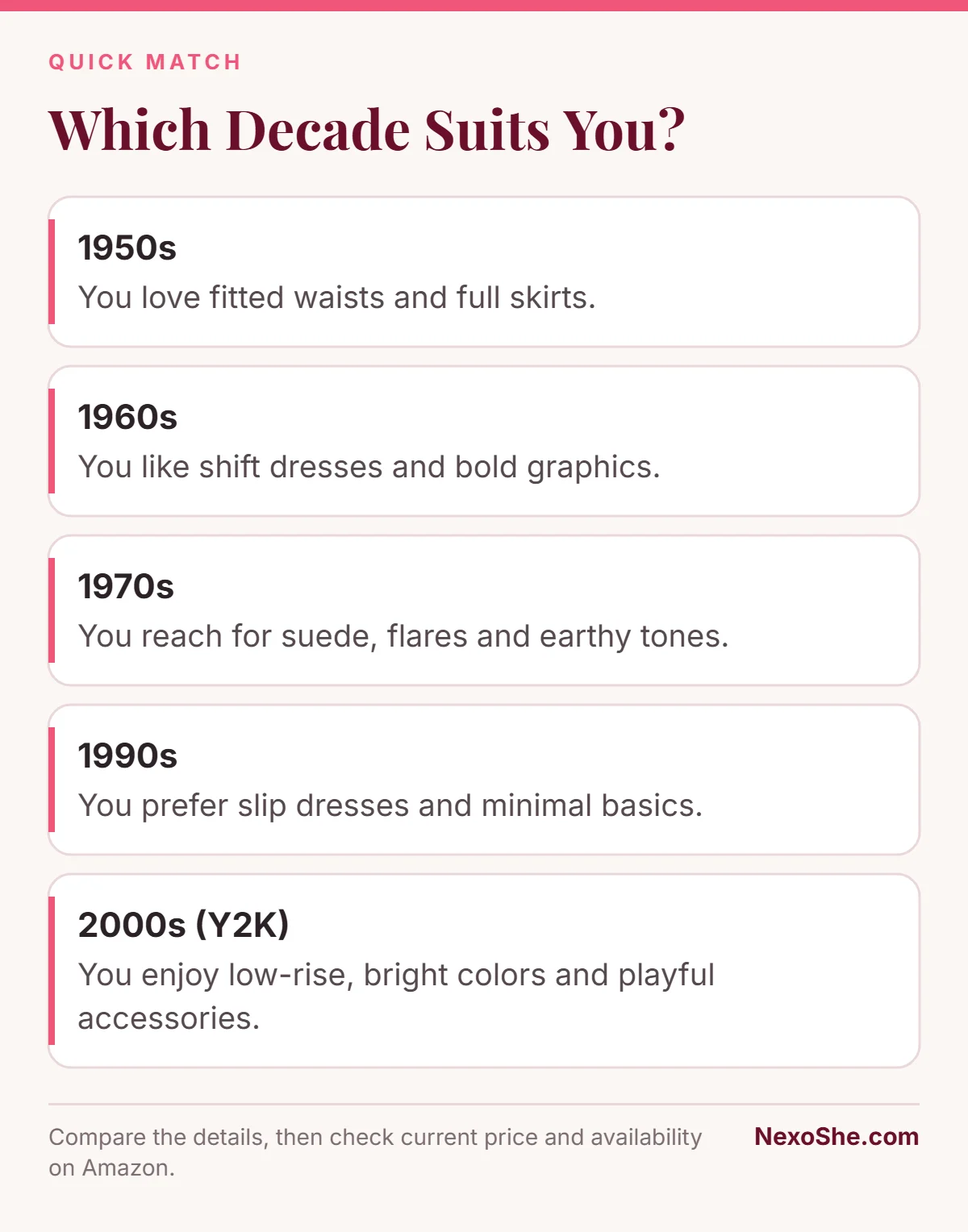
- If you love feminine shapes: try the 1950s with full skirts and fitted knits.
- If you love relaxed, earthy style: try the 1970s with flares, suede and maxi dresses.
- If you love minimal outfits: try the 1990s with slip dresses and straight jeans.
- If you love tailoring: try the 1940s and 1980s with structured blazers and high-waisted trousers.
- If you love playful trends: try Y2K pieces such as mini shoulder bags and baby tees.
Building a Small Vintage-Inspired Capsule
You only need a few pieces to bring vintage style into your wardrobe. Try a pair of flared or straight-leg jeans, a slip skirt, a wrap dress, a structured blazer, a suede-look jacket and knee-high boots. Mix them with your existing tees, knits and sneakers for outfits that feel personal and current.
Where to Find Vintage-Inspired Pieces
New vintage-inspired clothing is widely available online, including on Amazon, where searching by the style name, such as flare jeans, slip skirt or wrap dress, brings up many options in modern sizes. For true vintage, look at local thrift stores, consignment shops, vintage markets and secondhand apps.
Whichever route you choose, check measurements, fabric and customer comments or seller descriptions carefully before buying, since photos do not always show fit and condition clearly.
Vintage Style for Work
Vintage-inspired tailoring works well in the office. A high-waisted wide-leg trouser with a tucked blouse feels 1940s, a pleated midi skirt with a fitted knit nods to the 1950s, and a structured blazer brings a touch of the 1980s. Keep colors classic and accessories simple for a polished result.
Vintage Style for Evenings
For dinners and parties, a 1990s slip dress with heeled sandals and a small shoulder bag is simple and elegant. A 1970s-inspired satin blouse with flared trousers feels glamorous, while a 1950s-style full skirt with a fitted top and kitten heels is pretty for special events. Choose one retro statement and keep the rest modern.
Final Verdict
Vintage-inspired fashion is about borrowing the best shapes from past decades and wearing them in a modern way. Start with one piece from the era you like most, such as flared jeans, a slip dress or a strong-shoulder blazer, pair it with clean basics, and build from there. The result is a wardrobe that feels individual and does not date quickly.
How we chose these picks: We compared Amazon product listings, brand information and patterns in recent customer feedback to match each pick to a specific need. We have not personally tested every product. Prices, deals and availability change often, so check the current details on Amazon before you buy. Graphics on this page are original NexoShe illustrations; photos are from Pexels.
Frequently Asked Questions
Which vintage trends are easiest to wear today?
Straight jeans, slip dresses, wrap dresses and knee-high boots, because they fit with modern basics.
How do I make vintage clothing look modern?
Wear one vintage-inspired piece at a time and pair it with modern shoes, a clean bag and simple jewelry.
Do I need to buy real vintage?
No. Many current brands make vintage-inspired pieces. Thrift and vintage stores are great too, but plan on minor tailoring.
More from NexoShe
Try these trends with our chic outfit ideas, Chelsea boots and silk scarves.
Find more style guides on the NexoShe Fashion page.
Photos: Pexels. Outfit ideas are styling suggestions based on our research, not personal product tests. Check sizing, materials and return policies on Amazon before you buy.