
How to Wear Curtain Bangs with Fine, Thick, Straight, Wavy or Curly Hair
Curtain bangs part in the middle and sweep away from the face, but the way you dry and set them changes with fine, thick, straight, wavy and curly hair. This guide is for anyone considering the cut or already wearing it: how to ask your stylist, styling steps for your hair type, a grow-out plan and the tools worth buying.
NexoShe is reader-supported. As an Amazon Associate I earn from qualifying purchases. When you buy through links on our site, we may earn a commission at no extra cost to you. Read our full affiliate disclosure, written in line with the FTC Endorsement Guides.
Quick Picks
- Best for shaping short bangs: mini round brush
- Best for thick hair: hot air brush
- Best for a soft bend: small-plate flat iron
- Best low-heat option: velcro rollers
- Best for second-day bangs: dry shampoo
| Tool | Best for |
|---|---|
| Mini Round Brush View on Amazon → | Fine hair, shorter curtain bangs and quick touch-ups |
| Dry Shampoo View on Amazon → | Fine or oily-feeling bangs and busy mornings |
| Medium Round Brush View on Amazon → | Longer curtain bangs, thick hair and blending bangs into face-framing layers |
| Hot Air Brush View on Amazon → | Anyone who finds a separate dryer and brush awkward |
| Small-Plate Flat Iron View on Amazon → | Straight hair and quick bang touch-ups between washes |
| Heat Protectant Spray View on Amazon → | Anyone who blow-dries, flat irons or uses a hot air brush on their bangs |
| Velcro Rollers View on Amazon → | Wavy hair, volume at the root and hands-free styling |
| Texture Spray View on Amazon → | Wavy and straight hair that looks too sleek or separates into strands |
| Bang Clips and Mini Claw Clips View on Amazon → | Grow-out phases, workouts, skincare time and curly bangs that are drying |
What Are Curtain Bangs?

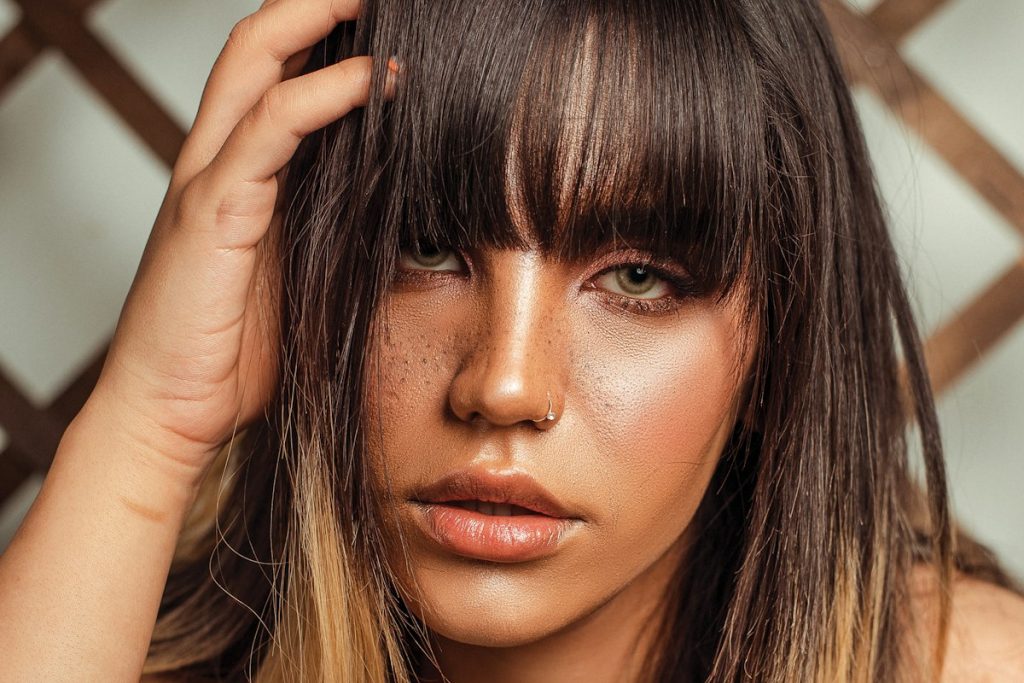
Curtain bangs are a fringe that is shortest at the center part and longer toward the cheekbones, so the two sides open like curtains and blend into face-framing layers. They can be swept aside, tucked or pinned back, which makes them feel lower-commitment than blunt bangs.
How to Ask Your Stylist for Curtain Bangs
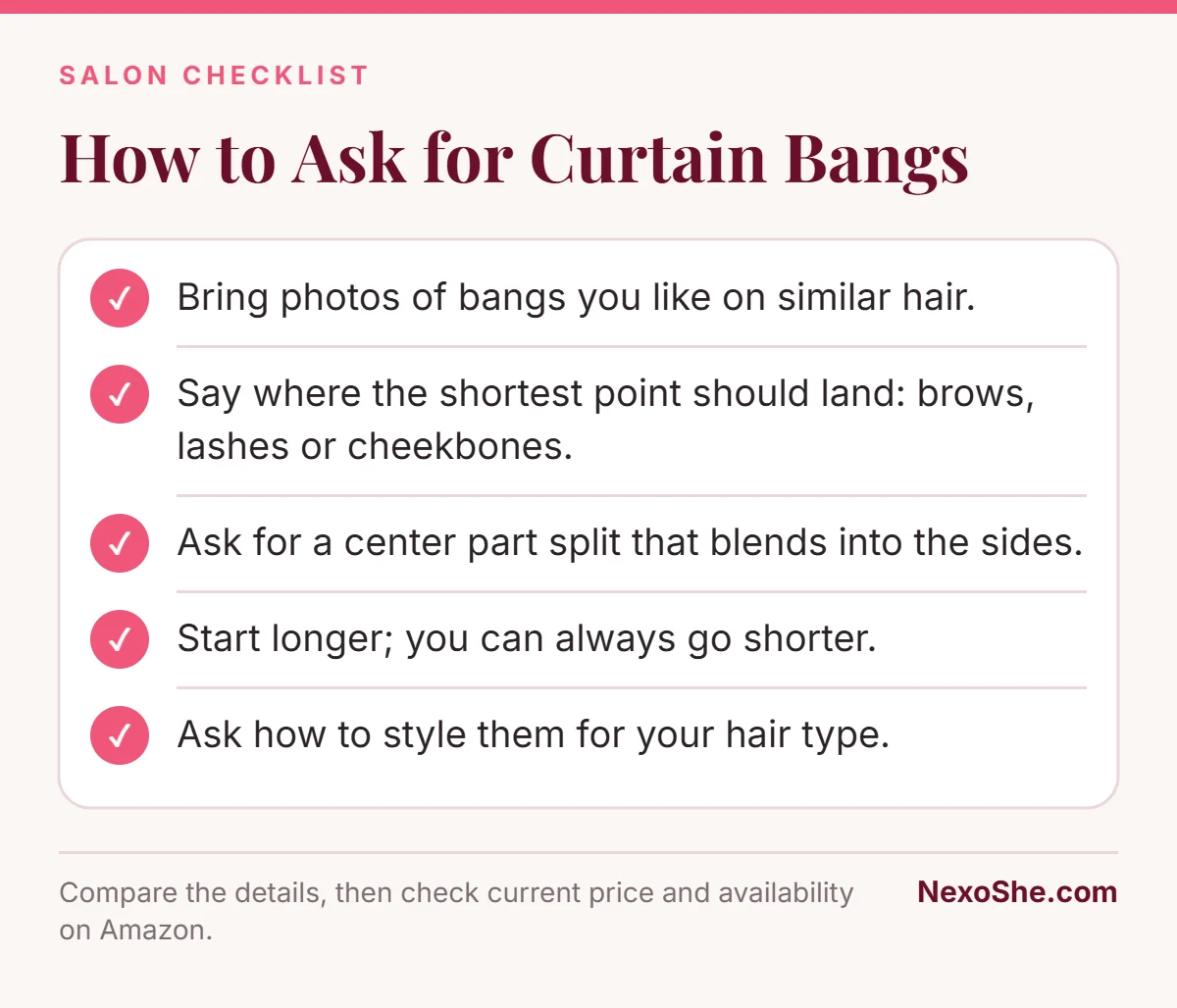
Bring a few photos of curtain bangs on someone with your hair texture, then cover these details so your stylist can tailor the cut to your face shape, cowlicks and routine:
- Where the shortest point should land: around the brows, the lash line or the cheekbone.
- How you usually style your hair: air-dried, blow-dried or heat-styled most days.
- Start longer: a longer first cut can always be trimmed shorter later.
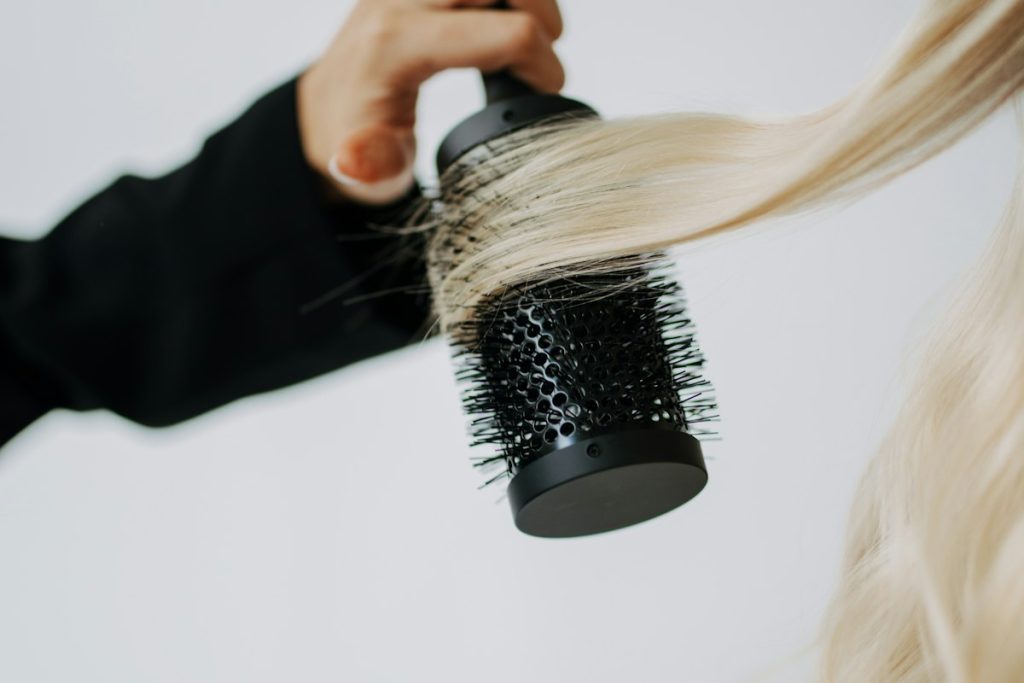
How to Style Curtain Bangs for Your Hair Type
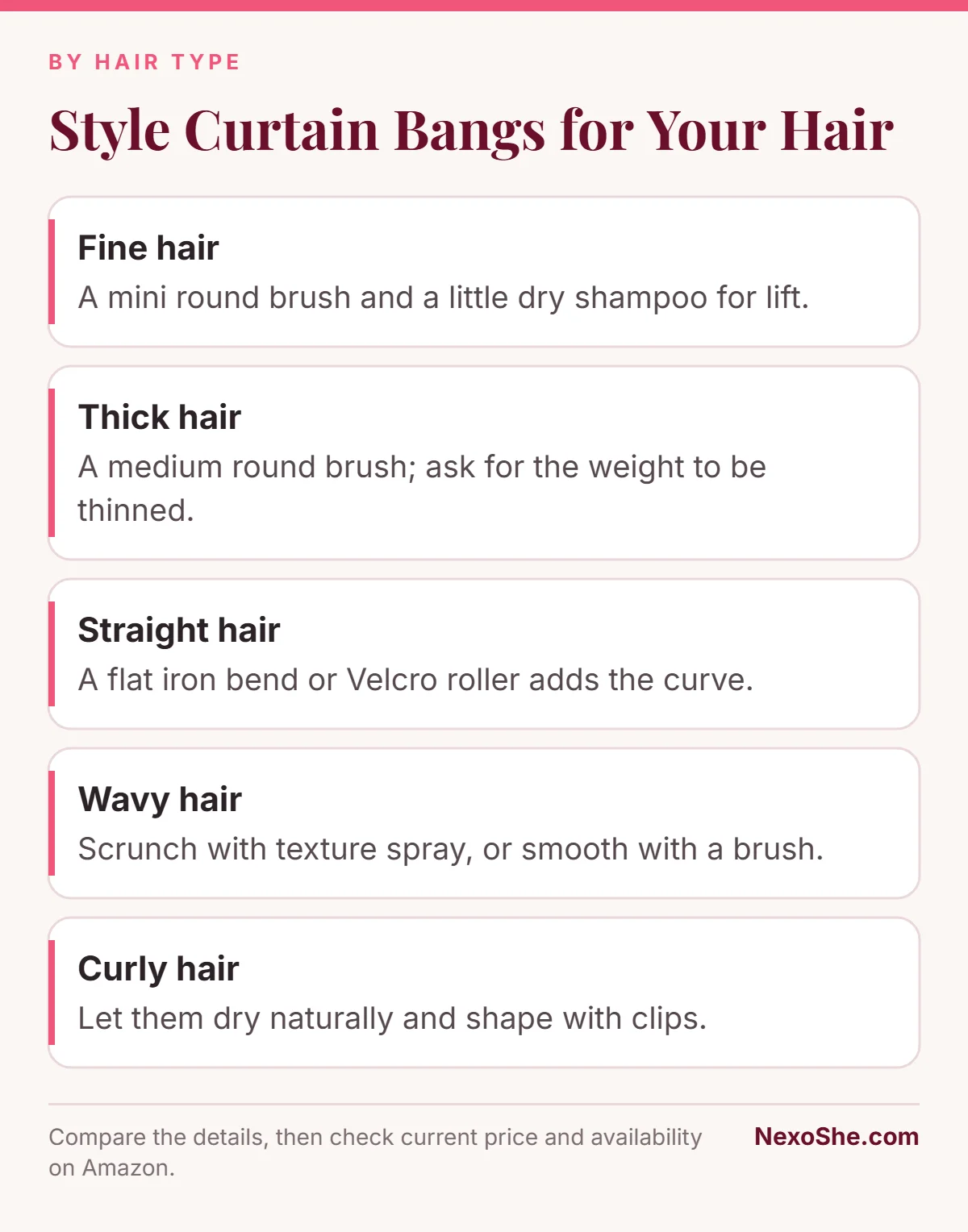
For every texture, style the bangs first while the rest of your hair is damp, and dry them in the direction you want them to fall.
Fine Hair
Fine hair can fall flat by midday, so aim for lift at the root. Dry the bangs straight forward, then roll a small round brush away from your face on each side and let them cool before releasing. On day two, mist dry shampoo at the roots.
Best for shaping short bangs
Mini Round Brush
Best for: fine hair, shorter curtain bangs and quick touch-ups
Why we recommend it: A small barrel gives you control over short pieces that a full-size brush can skip right past. It makes it easier to bend each side of the fringe away from the face and build a little lift at the root.
Key features to look for
- A small barrel sized for bangs and face-framing pieces
- A vented or ceramic-coated barrel for use with a dryer
- A grippy handle you can turn easily
Pros
- Precise control on short sections
- Small enough for a makeup bag
Cons / limitations
- Too small to dry the rest of your hair efficiently
- Takes a little practice to avoid tangling
Best for second-day bangs
Dry Shampoo
Best for: fine or oily-feeling bangs and busy mornings
Why we recommend it: Bangs often look ready for a wash before the rest of your hair. A quick spray at the roots is a common shortcut for stretching a style another day.
Key features to look for
- A tinted or clear formula that suits your hair color
- A travel size you can keep in your bag
- An ingredient list you are comfortable with; check the listing and patch test new products
Pros
- Fast refresh with no heat
- Adds a little grip and volume
Cons / limitations
- Untinted formulas can leave a white cast on dark hair
- Overusing it can make bangs feel stiff
Thick Hair
Thick bangs can puff out if left to air-dry, so ask your stylist about removing a little bulk. At home, rough-dry them almost fully, then smooth each side back and away with a medium round brush or a hot air brush.
Best classic blow-dry tool
Medium Round Brush
Best for: longer curtain bangs, thick hair and blending bangs into face-framing layers
Why we recommend it: A medium barrel creates a soft, rounded bend that connects longer bangs with your face-framing layers, with plenty of control over direction.
Key features to look for
- Mixed or boar-style bristles for grip and smoothing
- A vented barrel that lets airflow through
- A lightweight build that does not tire your wrist
Pros
- Works for bangs and the rest of your hair
- Gives a natural, rounded finish
Cons / limitations
- Needs two hands, one for the dryer
- Can feel too large for very short bangs
Best for thick hair
Hot Air Brush
Best for: anyone who finds a separate dryer and brush awkward
Why we recommend it: A hot air brush dries and shapes at the same time, so you only need one hand on the tool. Buyers often mention it makes a rounded, swept-back bang easier to repeat every morning.
Key features to look for
- Several heat and speed settings, including a cool setting
- A barrel size that suits your bang length
- A swivel cord and a comfortable weight
Pros
- Dries and styles in one step
- Easier for beginners than a two-tool blow-dry
Cons / limitations
- Bulkier to store and pack than a brush
- Large barrels can be hard to use on short bangs
Straight Hair
Straight bangs need a gentle bend to open up. Mist on heat protectant, then glide a small-plate flat iron down and away from your face with a slight twist at the ends, following the tool’s directions for heat settings.
Best for a soft bend
Small-Plate Flat Iron
Best for: straight hair and quick bang touch-ups between washes
Why we recommend it: Narrow plates get close to the root on short pieces and make it easy to add a curve rather than a poker-straight finish. Many are compact enough to slip into a travel makeup bag.
Key features to look for
- Narrow plates sized for bangs and short layers
- Adjustable heat settings and an auto shut-off
- Rounded outer edges for bending as well as smoothing
Pros
- Fast touch-ups on dry hair
- Compact and travel-friendly
Cons / limitations
- Easy to over-straighten if you clamp too long
- Slow for styling longer, thicker hair
Best prep step before hot tools
Heat Protectant Spray
Best for: anyone who blow-dries, flat irons or uses a hot air brush on their bangs
Why we recommend it: Bangs often get heat daily, and a heat protectant spray is a prep step many stylists suggest before any hot tool. A light mist is usually enough.
Key features to look for
- A lightweight mist that will not weigh down short pieces
- Directions that match the tools you use; check the listing
- A fine-spray nozzle for even coverage
Pros
- Quick, easy addition to your routine
- Many formulas also help smooth flyaways
Cons / limitations
- Heavier formulas can make fine bangs greasy
- Scented versions may not suit everyone
Wavy Hair
Wavy bangs can bend in odd directions. Dry them smooth, roll each side away from your face on a velcro roller while you do your makeup, then shake them out and add a little texture spray to blend them with your waves.
Best low-heat option
Velcro Rollers
Best for: wavy hair, volume at the root and hands-free styling
Why we recommend it: Self-gripping rollers hold bangs in a rounded shape while they cool or finish drying, with no clips needed.
Key features to look for
- A set with mixed sizes for bangs and longer layers
- Grip that holds without snagging
- A storage pouch or box to keep the set together
Pros
- No extra heat once the roller is in
- Budget-friendly and reusable
Cons / limitations
- Can tangle in curly or very fine hair
- Hold is softer than a hot tool
Best for a lived-in finish
Texture Spray
Best for: wavy and straight hair that looks too sleek or separates into strands
Why we recommend it: A light texture spray adds grip and a slightly piecey look, which helps curtain bangs blend into the layers around them instead of sitting as two shiny panels.
Key features to look for
- A dry, flexible finish rather than a stiff hold
- A fine mist you can spray from a distance
- A mini size for touch-ups
Pros
- Gives bangs a soft, undone look
- Works on day-one and day-two hair
Cons / limitations
- Too much can feel gritty
- Not a strong hold for windy days
Curly Hair
Curly curtain bangs are often cut dry, curl by curl, so find a stylist comfortable with your texture, and expect them to look shorter once dry. Use your usual curl routine, scrunch, and air-dry or diffuse on low, clipping each side back while the rest dries.
What you’ll need: velcro rollers for extra root lift, a heat protectant spray if you diffuse or touch up with heat, and the bang clips below for drying and growing out.
How to Grow Out Curtain Bangs
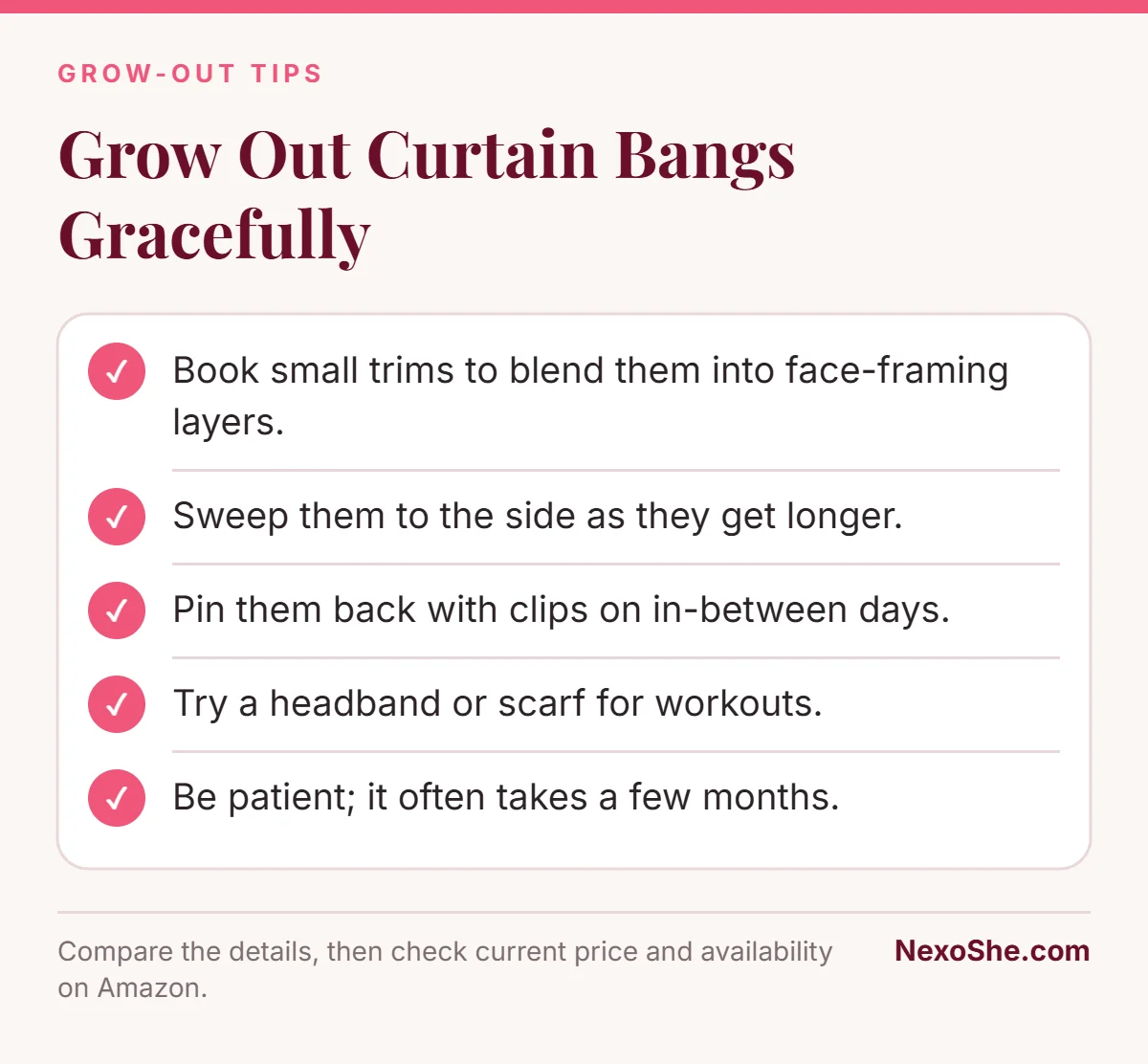
Curtain bangs already blend into longer layers, so they are easier to grow out than most fringes. Keep sweeping them to the sides, ask for small blending trims, and on awkward days twist each side back and pin it. Our guide to the best claw clips and hair accessories has more ideas for in-between lengths.
Best for growing them out
Bang Clips and Mini Claw Clips
Best for: grow-out phases, workouts, skincare time and curly bangs that are drying
Why we recommend it: Flat snap clips, crease-free clips and small claw clips hold bangs off your face without bending them out of shape. A mixed set gives you options for every stage of the grow-out.
Key features to look for
- Crease-free or flat clips for use while hair dries
- Smooth edges with no sharp seams
- A mix of sizes and colors in one set
Pros
- Turns an awkward length into a deliberate style
- Budget-friendly and easy to replace
Cons / limitations
- Small clips are easy to lose
- Some snap clips slide out of very fine hair
How to Choose Curtain Bang Styling Tools
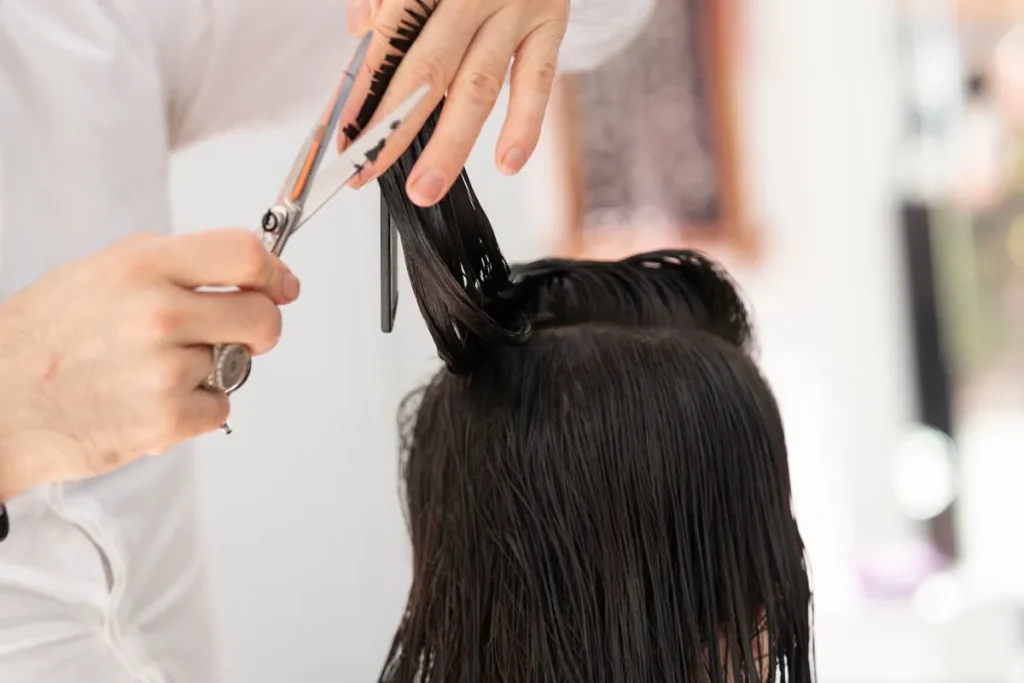
Match the tool to your bang length. Brow-length bangs suit a mini round brush or narrow flat iron; cheekbone-length bangs blend better with a medium brush, hot air brush or larger rollers.
Think about your routine. Daily stylers may prefer a hot air brush; rollers and clips suit low-heat routines. For hot tools, look for adjustable heat and auto shut-off, and follow the manufacturer’s directions.
Keep products light. Bangs sit close to your skin, so a little product goes a long way. Check the listing for ingredients and patch test anything new.
Protect your style overnight. Many people find a smooth pillowcase helps bangs look less crumpled in the morning; see our picks for the best silk pillowcases. Curious how we pick products? Read how we choose products.

How we chose these picks: We compared Amazon product listings, brand information and patterns in recent customer feedback to match each pick to a specific need. We have not personally tested every product. Prices, deals and availability change often, so check the current details on Amazon before you buy. Graphics on this page are original NexoShe illustrations; photos are from Pexels.
Got Questions?
Frequently Asked Questions
Do curtain bangs work on every hair type?
They can be adapted for most textures, but length, weight and cutting method vary. A stylist can tailor them to your texture, cowlicks and face shape, so bring photos and describe your routine.
How do I stop curtain bangs from going flat?
Dry them first, roll a small round brush or velcro roller away from your face and let them cool before releasing. Dry shampoo at the root helps on day two.
Can I style curtain bangs without heat?
Yes. Many people set nearly dry bangs in velcro rollers or flat clips while they get ready. The finish is softer than a blow-dry and depends on your texture.
How often should curtain bangs be trimmed?
It depends on your hair and preferred length. Many salons offer quick fringe trims between appointments, so ask your stylist what schedule suits your cut.
More from NexoShe
Want more face-framing layers? See how to ask for a butterfly haircut and style the layers at home, then wind down with our at-home spa night essentials.